
U.S-Based Expert Support
M–F 9a–5p EST
M–F 9a–5p EST
The best ankle brace depends on your injury and how much support you need: lace-up and stirrup braces for sprains, semi-rigid and rigid ankle braces for instability and arthritis, and walking boots for fractures. This guide compares the types of ankle braces and points you to the right one for your condition.

Ankle problems are common. About 2 million acute ankle sprains happen in the US every year, according to the Journal of Athletic Training. Add fractures, tendon problems and arthritis, and many people need some kind of ankle support at some point.
This guide covers the main types of ankle braces, the conditions they help and how to pick the right one. Each condition section links to a full guide if you want to go deeper.
Ankle pain by the numbers
There are five main types of ankle braces, from soft sleeves to rigid boots. The more an injury needs to be protected, the firmer the support. Lighter braces suit sports and mild pain, while firmer ones suit fresh injuries and unstable joints.
Most ankle braces fit inside a supportive lace-up shoe, while walking boots replace the shoe on that foot. Many braces come in adult and plus sizes, and some come in youth sizes. Some fit either ankle, while others are made for the left or right side.

Laces and figure 8 straps for moderate support that fits most shoes.

Hinged side shells that stop rolling but let the ankle bend.
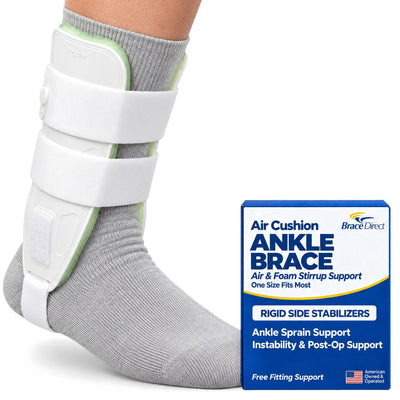
Rigid side shells with air or gel for firm support after a sprain.

Light support and warmth for mild pain and swelling.
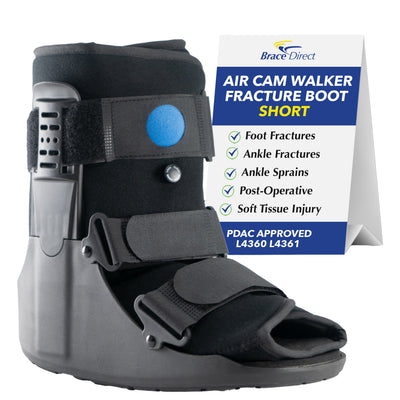
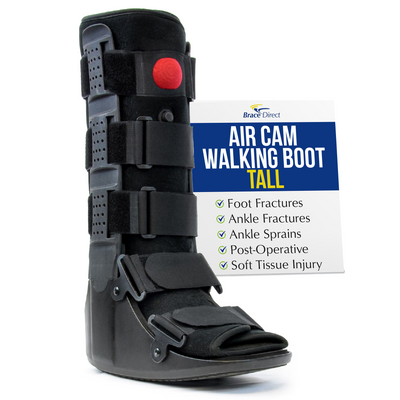
Firm protection for fractures, severe sprains and surgery.
Most ankle sprains happen when the foot rolls inward and the outer ligaments overstretch. A lace-up, stirrup or semi-rigid brace limits that roll while the ligaments heal. Severe sprains may start in a walking boot for a short time.
The right brace depends on the grade of sprain and your activity. Many people start with firmer support, then move to a lighter brace for sports. Wear the brace for walking, work and rehab at first, then mainly for sports and uneven ground. See a doctor if you can't put weight on the foot, since a fracture can feel like a sprain.
Chronic ankle instability means the ankle keeps rolling or giving way, often after a sprain that never fully recovered. The Journal of Athletic Training review notes that up to 70% of people who sprain the outer ankle may develop it. Weak ankles from low activity or aging can feel similar.
A brace with firm side support makes uneven ground and sports feel steadier. Pair it with balance and strengthening exercises so the muscles do more of the work over time. Will a brace weaken your ankle? Not if you keep up your exercises. Many people wear one only for sports, hikes and uneven ground once they feel stronger.
Achilles tendonitis causes pain and stiffness along the back of the heel, often worst in the morning. It usually comes from repetitive stress rather than one injury. AAOS OrthoInfo notes that heel lifts can decrease strain on the tendon, and night splints can ease morning pain.
Sleeves and braces help during activity, while night splints help at rest. A walking boot is used for severe pain or a rupture. Choose a brace that leaves the back of the heel free so nothing presses on the sore tendon. Calf stretching and a slow return to running or jumping matter just as much as the support you wear.
Posterior tibial tendon dysfunction, or PTTD, weakens the tendon that supports the arch. It causes pain along the inner ankle and can lead to adult acquired flat foot over time. Many people also notice the ankle rolling inward.
A lace-up brace with figure 8 straps is a common first choice for early PTTD. As the arch falls, doctors often move to an ankle foot orthosis (AFO) for firmer support. Wear the brace inside a supportive lace-up shoe with a firm heel. See a foot specialist if your arch changes shape or you can't rise up on your toes, since early care keeps options simpler.
Ankle arthritis causes a deep ache, stiffness and swelling in the joint. Old injuries are the most common cause. In a study of 639 arthritic ankles in the Iowa Orthopaedic Journal, 70% were post-traumatic.
A semi-rigid or rigid ankle brace limits the twisting that aggravates a worn joint. A compression sleeve can be enough for mild aches. Supportive shoes with stiff soles help too. Many people wear a brace for long walks and errands and take it off at rest. Talk to your doctor if pain keeps rising despite steady use of a brace.
A broken ankle is a break in the tibia, fibula or talus. AAOS OrthoInfo notes that ankle fractures are the fourth most common type of fracture in adults. Most take at least 6 weeks for early healing and 10 to 12 weeks for complete healing.
A stable fracture can often heal in a tall walking boot. After the boot, many people use an ankle brace while they rebuild strength. Follow your doctor's plan for weight, since walking on the ankle too early can shift the break. A thicker shoe on your other foot keeps your hips level while you are in the boot.
After ankle surgery, most people move from a splint or cast to a walking boot, then to an ankle brace. The timeline depends on the procedure, from ligament repair to ankle replacement. Forefoot surgeries usually use a post-op shoe instead.
Support protects the repair while it heals and makes walking, bathing and rehab easier. Your surgeon sets the schedule for each step. Keep the leg raised when resting, especially in the first weeks. Call your surgeon about pain that gets worse, fever, or new calf pain and swelling.
An ankle contracture keeps the foot pointed down and unable to bend up to 90 degrees. It is common after stroke, long bedrest and some nerve conditions. Without support, the foot can slowly stiffen in a pointed position.
Contracture splints and pressure relief AFOs hold the foot near 90 degrees. Many also float the heel off the mattress to help prevent pressure sores. Check the heel and ankle bones every day for red marks. Start with short sessions and build up as the skin allows, and keep up the daily range of motion your care team shows you.
Kids sprain and break ankles in sports, at recess and on the playground. Their bones have growth plates, so an ankle injury that causes real pain or limping needs a doctor's check.
Youth ankle braces fit smaller feet for sports and sprains. Pediatric walking boots protect broken bones and bad sprains while a child heals. Choose a pediatric or youth size rather than cutting down an adult brace, and check the size chart on the product page. Let coaches and teachers know when the brace should stay on during the day.
An ankle stabilizer is a type of ankle brace built to stop the ankle from rolling. Most have firm side shells or stays, sometimes with a hinge that lets the ankle bend forward and back. Is a semi-rigid ankle brace better than a lace-up? For firm side support, often yes.
Lace-up braces give moderate support and fit easily in shoes. Semi-rigid stabilizers give more control for sports, instability and the weeks after a sprain or boot. Practice in a new stabilizer before game day so it feels natural. A thin sock under the brace prevents rubbing during long practices.
An ankle splint, often called a stirrup splint, has rigid shells on both sides of the ankle. Many have air or gel pads that cushion and gently compress. It is used most for fresh sprains and the first weeks of recovery.
An ankle brace is a broader term that includes lace-ups, sleeves and stabilizers. Choose a splint for firm early support, then step down to a brace as you heal. Follow your doctor's advice on how long to wear a splint. Most people use one for a few weeks after a sprain and then move to a lace-up brace for sports.
Ankle compression sleeves give light support, warmth and gentle squeeze. Many people find they help with mild swelling, aches and stiffness during activity. They slide on like a sock and fit inside most shoes.
Is an ankle sleeve or an ankle brace better? A sleeve suits mild pain and comfort, while a brace suits sprains and unstable ankles. A sleeve should feel snug, never tight enough to cause tingling. Many people wear a sleeve during workouts or long days on their feet. If swelling is sudden or severe, see a doctor before relying on a sleeve.
Start with what happened and where it hurts. A sprain, a fracture and arthritis need very different support.
2Choose by support level: sleeves for mild pain, lace-ups and stabilizers for sprains and instability, boots for fractures and surgery.
3Use the size chart on the product page. Ankle braces are sized differently by each manufacturer.
Every ankle brace has its own size chart on the product page, so check it before you order. Sizing differs by brace type and manufacturer, and some braces are made for the left or right ankle while others fit either side. If you are between sizes, our team can help you choose.
Most ankle braces, splints and walking boots have an HCPCS code, the billing code Medicare and insurers use for medical equipment. We don't bill insurance, but you can submit your receipt to your insurer for possible reimbursement. Most of our braces are also HSA and FSA eligible.

US-based team, Monday to Friday
Tell us what's going on with your ankle and we'll help you find the right brace. Our specialists can help you choose a size and style before you buy, and after your brace arrives you can use our fitting videos or book a virtual fitting session.
Unused items in their original packaging can be returned or exchanged within 30 days of purchase. See our Return Policy for details.
Contact Our TeamIt depends on your injury. Sleeves suit mild pain, lace-up and stirrup braces suit sprains, semi-rigid braces suit instability and arthritis, and walking boots suit fractures and surgery.
Suggested: Brace Direct Semi-Rigid Active Ankle Brace
A lace-up brace wraps the ankle like a shoe and gives moderate support. A stirrup brace has rigid shells on each side for firmer support against rolling, often used right after a sprain.
Suggested: Breg Adjustable Lace-Up Ankle Support Brace or Brace Direct Air Stirrup Ankle Brace
Neither is better for everyone. Rigid braces suit fresh injuries, severe instability and arthritis. Soft braces and sleeves suit mild pain and everyday comfort.
Snug, but not tight. It should hold the ankle without pinching or causing tingling. Check the size chart on the product page before you order.
Many people wear a brace for most of the day during recovery or activity. Take it off at rest and at night unless your doctor says otherwise, and check your skin for red marks.
You can buy most of our ankle braces without a prescription. If you plan to submit a claim to your insurer, they may ask for one.
A stabilizer is a type of ankle brace with firm side support, made to stop rolling. Ankle brace is the broader term, which also includes lace-ups and sleeves.
Suggested: Brace Align Semi-Rigid Active Ankle Brace
For firm side support, often yes. Semi-rigid braces suit sports and unstable ankles, while lace-ups give moderate support and fit easily in shoes.
Suggested: Ossur Form Fit Ankle Brace
Yes, most lace-up, stirrup and semi-rigid braces fit inside a supportive lace-up shoe. Walking boots replace the shoe on that foot.