
U.S-Based Expert Support
M–F 9a–5p EST
M–F 9a–5p EST
The best brace for PTTD, or posterior tibial tendon dysfunction, is usually a lace-up ankle brace with figure 8 straps in the early stages, and a firmer ankle foot orthosis (AFO) once the arch starts to fall. A PTTD ankle brace eases strain on the tendon and supports the inner ankle, but it can't rebuild a flat arch.

Figure 8 straps take strain off the posterior tibial tendon with every step.
A brace holds the heel and arch steadier so the foot rolls in less.
A steadier ankle can make long walks and standing time feel less tiring.
PTTD is a painful problem with the posterior tibial tendon, which runs down the inside of the ankle and attaches under the arch. Cleveland Clinic explains that this tendon supports the arch of your foot, and as it weakens, it can no longer hold the arch up.
Over time, the arch can sink and the ankle can roll inward. Doctors call this adult acquired flat foot, or adult acquired flatfoot deformity. It usually develops slowly, one side at a time.
Early on, PTTD often feels like posterior tibial tendonitis: aching and swelling along the inner ankle after walking. Later, the foot may look flatter, and the heel may tilt outward when you stand.

PTTD usually comes from slow wear on the tendon rather than one injury. Mayo Clinic notes that the posterior tibialis tendon helps support the arch and can weaken or tear over time.
Years of walking and standing, especially without supportive shoes, can strain the tendon little by little.
A foot that is already flat or rolls inward puts extra stress on the tendon with every step.
Mayo Clinic lists obesity, aging, diabetes, rheumatoid arthritis and past foot or ankle injury as risk factors for flatfeet.
See a doctor if your arch changes shape, if you can't rise onto your toes, or if inner ankle pain lasts more than a few weeks. A brace supports the foot; it doesn't treat the cause.
A PTTD brace helps people whose inner ankle aches with activity or whose arch is starting to drop. These are the groups we hear from most.
A lace-up brace can calm posterior tibial tendonitis before the arch changes.
Firmer support helps when one foot is getting flatter over time.
Nurses, teachers and retail workers often feel PTTD most at the end of a shift.
A brace limits the inward roll that strains the tendon.
More load on the arch means more strain on the tendon, so support helps.
A brace can keep you walking more comfortably while you plan next steps.
A PTTD brace supports the inside of the ankle and limits the inward roll of the foot. Hospital for Special Surgery notes that a walking boot or brace is the most effective way to relieve tendon pain, though no boot, brace or orthotic has been shown to reverse the deformity.
Straps and stays share the work the weak tendon can't do on its own.
The brace keeps the ankle from tipping inward as you push off.
A firmer heel position keeps the arch from sinking as much under load.
PTTD braces range from soft wraps to rigid AFOs. The right one depends on your stage, your pain and how far the arch has dropped.
Laces and crossing straps support the inner ankle. A common first brace for early PTTD.
A knit sleeve with a strap. Light support for mild pain and long days.
A low-profile wrap around the arch and ankle for mild strain.
A footplate and upright hold the foot and ankle firmly when the arch is falling.
Doctors describe PTTD in four stages. Cleveland Clinic describes stage 1 as mild tendonitis, while by stage 3 the arch has collapsed and become rigid. The stage helps decide which brace makes sense.
PTTD stages are a doctor's diagnosis, not a self-check. An exam, and sometimes imaging, tells you where you are.

An ankle brace for posterior tibial tendonitis should support the inner ankle without blocking normal walking. A lace-up brace with figure 8 straps is a common choice. The straps cross over the ankle and pull it gently away from the inward roll that strains the tendon.
Wear the brace for the activities that bring on pain, such as long walks, shifts on your feet or hikes. Pair it with the calf and foot exercises your physical therapist gives you.
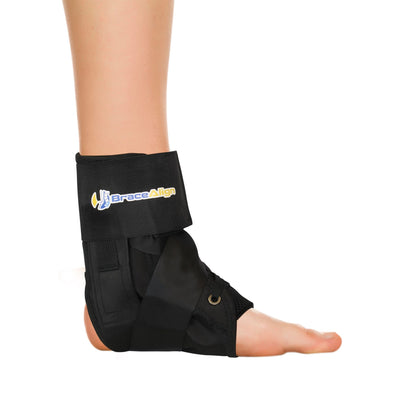

An ankle brace for flat feet helps most when the flat foot hurts. Mayo Clinic notes that most people with flatfeet have no symptoms, so a painless flat foot usually doesn't need a brace at all.
When adult acquired flatfoot comes from PTTD, support matters more. Mild cases often do well with a wrap or lace-up brace. When the arch keeps dropping, doctors often move to an AFO, which holds the heel and arch more firmly.

Pronation is the normal inward roll of the foot as you land. Overpronation, or pronated ankles, means the foot rolls in too far. It often comes from flat feet, a weak posterior tibial tendon, loose ligaments or tight calves.
Is overpronation the same as flat feet? Not exactly. Many people with flat feet overpronate, but not everyone who overpronates has a flat arch. Supination is the opposite, when the foot rolls outward onto its edge.
An ankle brace can't remove overpronation, but it can limit the inward roll during activity. Insoles change how the foot lands, while a brace steadies the ankle above it. Many people do best with both, plus strengthening work.
Ankle varus and valgus describe the angle of the heel and ankle. In valgus, the heel tilts outward and the ankle drops inward, which often goes with flat feet and PTTD. In varus, the heel tilts inward and weight shifts to the outer edge of the foot.
Valgus ankles in adults often come from PTTD, arthritis or an old injury. Varus can come from a high arch, a nerve problem or past ankle sprains. A brace can't change the bone alignment, but it can control the tilt while you walk. When the tilt is moderate or more, doctors often use an AFO.


Foot stabilizers can work well for the right problem. A foot stabilizer is any brace, AFO or wrap that limits unwanted motion in the foot and ankle. For an unstable foot from PTTD, pronation or valgus, it reduces the wobble that strains tendons and ligaments.
An unstable foot when walking can come from weak muscles, loose ligaments, nerve problems or a falling arch. A stabilizer helps you walk more steadily, but it works best alongside strength and balance training. If your foot gives way often, see a doctor to find the cause.
Most PTTD braces are made to wear inside a shoe. A lace-up athletic shoe with a firm heel counter and a wide base works best. Slip-ons and soft, flexible shoes let the foot roll in and can undo the brace's support.
Arch supports and a brace work well together. The insole supports the arch from below, and the brace steadies the ankle from the sides. If your shoe feels tight with both, try removing the shoe's own insole or going up a half size.
A brace is the usual choice for ongoing support. A walking boot is used for short periods when the tendon is very painful or swollen. Cleveland Clinic notes that in more severe cases, you might need to wear a cast or boot for a few weeks.
After the boot, most people move to a lace-up brace or AFO for daily activity. Your doctor will decide which you need and for how long.

Wear it first for the walks or shifts that hurt most, then add time.
Tighten the laces first, then pull the figure 8 straps for inner ankle support.
Look for red marks after each use, especially along the inner ankle bone.
A brace works best with the strengthening plan from your physical therapist.
Most PTTD and flat foot braces have an HCPCS code, the billing code Medicare and insurers use for braces and orthoses. We don't bill insurance, but you can submit your receipt to your insurer for possible reimbursement. Most of our braces are also HSA and FSA eligible.

US-based team, Monday to Friday
Not sure which PTTD brace fits you? Tell us your stage if you know it, what shoes you wear and how long you're on your feet each day. Our specialists can help you choose a size and style before you buy, and after your brace arrives you can use our fitting videos or book a virtual fitting session.
Unused items in their original packaging can be returned or exchanged within 30 days of purchase. See our Return Policy for details.
Contact Our TeamFor early PTTD, a lace-up ankle brace with figure 8 straps is the best place to start for most people. When the arch has started to fall, an AFO gives firmer support. Your doctor can confirm your stage.
Suggested: Brace Align Ankle Brace or WalkOn Flex AFO
Yes, for many people. A brace supports the inner ankle and takes some load off the tendon, which can ease pain during activity. It works best with rest, ice and strengthening.
Suggested: Brace Direct Lace Up Ankle Brace
No. A brace can ease pain and limit the inward roll, but braces and orthotics have not been shown to reverse a flat foot. Think of a brace as support, not a correction.
It depends on your stage and your doctor's plan. Many people wear a brace for activity during a flare and then as needed. Cleveland Clinic notes full recovery with conservative treatment can take three or four months.
Yes, most lace-up braces and many AFOs fit inside a supportive lace-up shoe. Shoes with a firm heel and a wide base work best. Avoid slip-ons and very soft shoes.
PTTD can get worse over time. The arch may keep falling and become rigid, and the ankle can be affected in later stages. Early care often keeps treatment simpler.
Common causes include flat feet, a weak posterior tibial tendon, loose ligaments and tight calves. Overpronation can also come from past ankle injuries or how you walk.
A brace can't remove overpronation, but it can limit the inward roll while you're active. Many people pair a brace with arch supports and strengthening exercises.
Suggested: Brace Direct Leaf Spring AFO