
U.S-Based Expert Support
M–F 9a–5p EST
M–F 9a–5p EST
The best brace for Achilles tendonitis depends on when it hurts: a compression sleeve or ankle brace for activity, a heel lift to ease strain, and a night splint for sharp morning pain. For severe Achilles tendinitis or a torn tendon, doctors often use a walking boot for a short time.

Heel lifts and supports reduce the pull on the Achilles with every step.
A night splint keeps the calf stretched overnight, so mornings hurt less.
A sleeve or brace adds warmth and support for walks and workouts.
Achilles tendonitis, also spelled Achilles tendinitis, is irritation of the thick tendon that joins your calf muscles to your heel bone. AAOS OrthoInfo describes two types. Noninsertional tendinitis affects the middle of the tendon, while insertional tendinitis affects the lower part where it attaches to the heel.
The tendon often feels stiff and sore first thing in the morning or when you start exercising. It may loosen up as you move, then ache again later. Some people notice a thick or tender spot along the tendon.
Achilles pain tends to improve slowly. Bracing, stretching and smart changes to your activity all help, and the right support makes daily life more comfortable while the tendon settles down.

Achilles tendinitis is usually not related to a specific injury. AAOS explains that it results from repetitive stress to the tendon.
A sudden jump in running, hills, jumping or training time loads the tendon faster than it can adapt.
Calf muscle tightness puts extra stress on the Achilles tendon with each step.
Bone spurs where the tendon attaches can rub and irritate it, especially in insertional tendinitis.
See a doctor right away if you feel a pop or snap in the back of the leg, or can't push off your foot. That can be a rupture. A brace supports the tendon; it doesn't treat the cause.
An Achilles brace helps anyone whose heel cord hurts with walking, sports or the first steps of the day. These are the people we help most often.
A sleeve or brace adds support as you ease back into your routine.
Tennis, pickleball and basketball load the tendon with quick starts and stops.
A night splint keeps the calf from tightening while you sleep.
A heel lift in a supportive shoe reduces strain during long shifts.
A tall walking boot protects the tendon while it heals.
Mayo Clinic reports the peak age for Achilles rupture is 30 to 40.
Achilles supports work in a few different ways. Some reduce the stretch on the tendon, some hold a gentle stretch at night, and some add compression and warmth during activity.
A heel lift raises the heel slightly, so the tendon does not stretch as far.
A night splint keeps the foot near 90 degrees so the calf stays long overnight.
A sleeve or brace hugs the ankle, which many people find soothing during activity.
There are five main types of Achilles tendon support. Many people use two together, such as a sleeve by day and a night splint at night.
A knit or neoprene sleeve over the ankle and heel. Light support for activity.
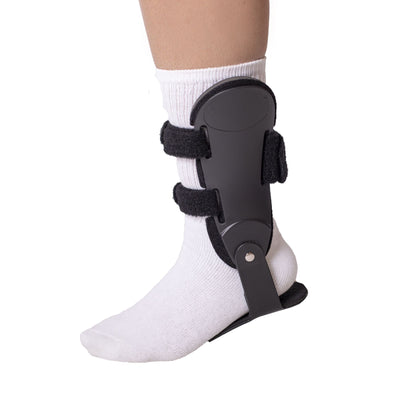
A lace-up or semi-rigid brace that adds side support and limits extra motion.
A small wedge under the heel that eases the pull on the tendon.
Holds the foot at a gentle stretch while you sleep.
Rests the tendon for severe flares and after a rupture or surgery.
Not everyone does. Mild Achilles pain often improves with rest, ice, calf stretching and changes to your training. AAOS OrthoInfo notes that placing ice on the most painful area of the tendon is helpful.
A brace makes sense when pain keeps you from walking, working or exercising, or when mornings are the hardest part of your day. It is a support tool, so use it alongside the stretching and strengthening plan from your doctor or physical therapist.
A compression sleeve is the lightest form of Achilles tendon support. It slides on like a sock and fits inside most athletic shoes. Many people like the warmth and gentle squeeze during walks, runs and long days.
Sleeves with a figure 8 strap add a little more ankle control. They are a good middle step between a plain sleeve and a full ankle brace.


The best ankle brace for Achilles tendonitis supports the ankle without pressing on the tendon itself. Semi-rigid braces with side shells and lace-up braces both work. Look for an open or well-padded back so the brace doesn't rub where it hurts.
An ankle brace helps most when Achilles pain comes with a wobbly ankle or when you're returning to sports with cutting and jumping.

An Achilles heel lift is one of the simplest tools for this condition. AAOS OrthoInfo says heel lifts can decrease the amount of strain on the tendon. Raising the heel slightly means the tendon doesn't stretch as far with each step.
Use a lift in both shoes so your hips stay level. Heel cups add cushion under the heel, which can help when insertional tendinitis makes the back of the heel tender. Some Achilles braces include heel wedges inside the support.

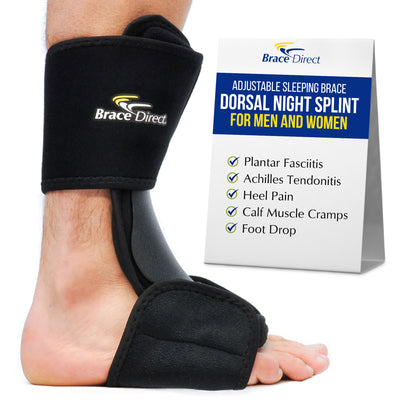
A night splint for Achilles tendonitis holds the foot near 90 degrees while you sleep. Without it, most people sleep with their toes pointed, so the calf and tendon tighten overnight. That tightness is why the first steps of the morning hurt so much.
AAOS notes that night splinting can provide significant relief for morning pain when you first get out of bed. Boot-style splints sit behind the leg, while dorsal splints sit on the front of the shin and leave the heel open.

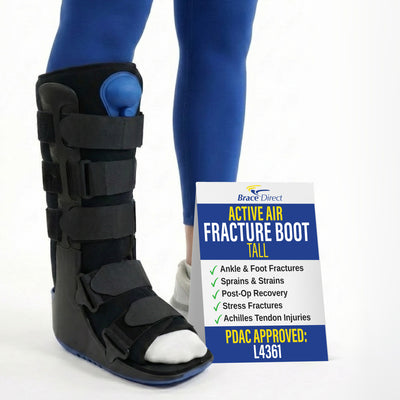
A walking boot for Achilles tendonitis is for bad flares, not everyday support. AAOS notes that if your pain is severe, your doctor may recommend a walking boot for a short time. The boot rests the tendon while still letting you get around.
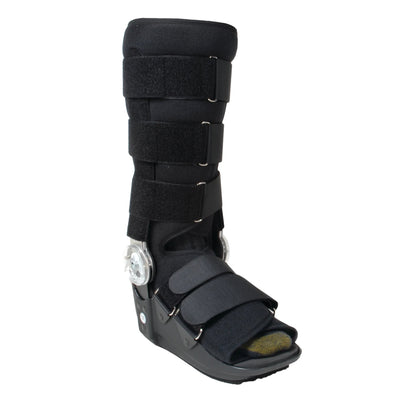
Tall boots are the usual choice for Achilles problems because they reach high on the calf. Once the flare settles, most people step down to a sleeve, brace or heel lift.

Tendonitis is irritation of the tendon. A rupture is a partial or full tear. Mayo Clinic explains that a rupture may cause a pop, then sharp pain in the back of the ankle and lower leg. Ruptures happen more often in sports with running, jumping and sudden starts and stops.
Most ruptures happen during activity. A study in the Orthopaedic Journal of Sports Medicine found that 81.9% of Achilles ruptures occurred during sports or recreation.
How long do you wear a boot after an Achilles rupture? It depends on whether you have surgery and on your surgeon's plan, so there is no single answer. Many plans use a walking boot with heel wedges that hold the toes pointed slightly down. The wedges come out one at a time as the tendon heals.
Peroneal tendonitis causes pain along the outside of the ankle, behind the bony bump. The peroneal tendons help steady the ankle and keep it from rolling outward. They often get sore after an ankle sprain, with high arches, or with a jump in walking on uneven ground.
An ankle brace for peroneal tendonitis should support the outer ankle and limit rolling. Lace-up and semi-rigid braces both do this. If outer ankle pain lasts more than a few weeks, see a doctor to rule out a tendon tear.

Wear it for part of the night at first, then build to the full night.
Make sure nothing presses on the sore spot of the tendon.
Gentle calf stretches work best alongside any brace or splint.
Add distance and speed a little at a time as pain allows.
Many Achilles braces, night splints and walking boots have an HCPCS code, the billing code Medicare and insurers use for medical equipment. We don't bill insurance, but you can submit your receipt to your insurer for possible reimbursement. Most of our braces are also HSA and FSA eligible.

US-based team, Monday to Friday
Not sure which Achilles support fits you? Tell us when it hurts most, what activities you do and whether a doctor has checked for a tear. Our specialists can help you choose a size and style before you buy, and after your brace arrives you can use our fitting videos or book a virtual fitting session.
Unused items in their original packaging can be returned or exchanged within 30 days of purchase. See our Return Policy for details.
Contact Our TeamIt depends on when it hurts. A compression sleeve or ankle brace helps during activity, and a night splint helps with morning pain. Many people use both.
Suggested: Brace Direct Sport Ankle Compression Sleeve or Brace Direct 90 Degree Night Splint
A brace can ease pain and reduce strain while the tendon settles down. It works best alongside rest, ice, calf stretching and a gradual return to activity.
Yes, if walking brings on pain. A sleeve, ankle brace or heel lift can make walks more comfortable. Take it off at rest unless your doctor says otherwise.
Suggested: Bauerfeind AchilloTrain Achilles Tendonitis Brace
Sleep in a night splint, not a daytime sleeve or brace. A night splint holds a gentle stretch so the calf does not tighten overnight.
Suggested: Brace Direct Dorsal Night Splint
Yes, for many people. AAOS says heel lifts can decrease strain on the tendon. Use them in both shoes so your hips stay level.
Only for severe pain or when your doctor recommends it. A walking boot rests the tendon for a short time, and then most people move back to a brace or sleeve.
It varies. AAOS notes that even with early treatment, the pain may last longer than 3 months. A brace helps you stay comfortable during that time.
It depends on whether you have surgery and on your surgeon's plan. Many plans use a boot with heel wedges that are removed in steps. Follow your care team's schedule exactly.