
U.S-Based Expert Support
M–F 9a–5p EST
M–F 9a–5p EST
There are several types of wrist braces, and each one does a different job. Wrist splints hold the wrist straight for carpal tunnel and tendonitis, thumb spicas rest the thumb, and hinged braces, fracture splints and resting hand splints protect the hand and wrist during recovery.

Hand and wrist problems are common, and many of them respond well to the right support. Fractures are one example: about 1 in 6 broken bones treated in US emergency rooms is a broken wrist, according to the American Academy of Orthopaedic Surgeons. Overuse problems like carpal tunnel and tendonitis are just as common in people who type, lift or grip all day.
This guide answers the question "what type of wrist brace do I need?" It covers the main types of wrist support, the conditions they help and how to choose. Each section links to a full guide, or you can shop hand and wrist braces by condition.
Wrist and hand pain by the numbers
Wrist and hand braces fall into five main groups. Some hold the wrist straight, some rest the thumb, and some protect a break or hold a stretch. Knowing which group fits your problem narrows your choice fast.
Most braces come in right hand and left hand versions, so check the side before you order. A few fit either hand.

A firm stay holds the wrist straight, day or night.

Adjustable laces and a stay for all-day wrist support.
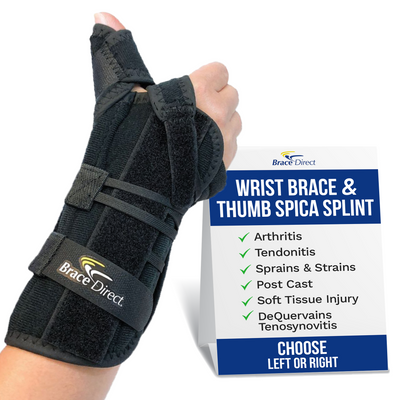
Hold the thumb still, with or without the wrist.

Protect a broken wrist or hand during healing.

Support the wrist, hand and fingers for arthritis and contractures.
Carpal tunnel syndrome is pressure on a nerve in the wrist. It causes numbness and tingling in the thumb and first fingers, and it often wakes people at night. It affects women about three times as often as men, according to StatPearls.
A wrist splint that holds the wrist straight takes pressure off the nerve. Most people start with a night splint, then add a slimmer brace for work if needed.
A wrist splint has a firm stay, often metal or plastic, that holds the wrist in one position. A cock up wrist splint holds the wrist straight or slightly bent back in a resting position. It is used for carpal tunnel, tendonitis and some sprains, and for carpal tunnel the goal is a straight, neutral wrist. Splints are good for sleep and for resting a sore wrist.
A wrist brace is often softer or laced. It supports the wrist but lets it move a little, so it suits work and daily tasks. Many people own both.
Wrist tendonitis is irritation of the tendons that bend and straighten the wrist. Typing, lifting and racquet sports are common triggers. Pain usually comes with movement and eases with rest.
A wrist brace with a stay limits the bending that strains the tendons, while your fingers and thumb stay free. Wear it during the tasks that hurt.
De Quervain's tenosynovitis irritates two thumb tendons on the thumb side of the wrist. One study found it in 1.3% of women and 0.5% of men, according to StatPearls. New parents and people who lift or grip often are at higher risk.
A thumb spica that covers the wrist and thumb keeps both still, so the tendons can rest. Many people get the most relief by wearing it at night.
Thumb pain usually comes from arthritis at the base of the thumb, a tendon problem like trigger thumb, or a sprained ligament. Thumb arthritis is common with age, and women are 2 to 3 times more likely to get it, according to AAOS.
A short thumb spica supports the thumb and leaves the wrist free. That suits arthritis, trigger thumb and mild sprains.
Arthritis in the hand and wrist causes stiff, achy joints, often worst in the morning. Osteoarthritis is the wear-and-tear type, and rheumatoid arthritis often affects both hands.
A wrist and thumb brace limits painful motion during tasks, and a night splint keeps the wrist straight while you sleep. Take the brace off for gentle exercise so the hand stays strong.
A contracture is a wrist or fingers stuck in a bent position, often after a stroke or brain injury. A resting hand splint, also called a WHFO, supports the wrist, hand and fingers in a gentle, open stretch.
These splints are mostly worn at rest and at night. A therapist usually sets the angle and wear time.
A broken wrist usually starts in a cast or splint. Once your doctor allows it, a removable brace can protect the wrist during therapy. AAOS notes that most distal radius fractures take about 3 months to heal enough for all activities.
Hinged braces let your therapist set how far the wrist can bend. Lace-up braces give steady support after the cast comes off.
A wrist sprain is a stretched or torn ligament, often from a fall onto an outstretched hand. Swelling, bruising and pain when you bend the wrist are common.
A splinted brace limits painful bending while the ligament heals. Get an X-ray if pain is severe, since a sprain and a break can feel the same.
A boxer's fracture is a break in the bone below the little finger, often from punching a hard object. Hand splints support the side of the hand that is broken and keep the bones in line as they heal.
After hand surgery, your surgeon will tell you which splint to wear and for how long. A removable splint lets you keep the skin clean and start therapy when cleared.
Wrist hyperextension means the wrist bends too far back, often from a fall on the hands in skating, snowboarding or gymnastics. It can sprain the ligaments on the palm side of the wrist.
A wrist guard has a firm piece that limits how far back the wrist can bend. Wear it during the sport that puts your wrist at risk.
Start with where it hurts and what's causing it. Numb fingers, thumb pain and a broken wrist need very different braces.
2Think about when you'll wear it. Splints suit night and rest, slim braces suit work, and spicas add thumb support.
3Use the size chart on the product page, and pick the right hand or left hand version.
Every brace has its own size chart on the product page, so check it before you order. Sizing differs by brace and manufacturer, and many wrist and hand braces come in separate right hand and left hand versions. If you're between sizes, our team can help you choose.


Most wrist and hand braces have an HCPCS code, the billing code Medicare and insurers use for medical equipment. We don't bill insurance, but you can submit your receipt to your insurer for possible reimbursement. Most of our braces are also HSA and FSA eligible.

US-based team, Monday to Friday
Not sure which hand or wrist brace you need? Tell us where it hurts, when it hurts most and which hand needs support. Our specialists can help you choose a size and style before you buy, and after your brace arrives you can use our fitting videos or book a virtual fitting session.
Unused items in their original packaging can be returned or exchanged within 30 days of purchase. See our Return Policy for details.
Contact Our TeamIt depends on your condition. A wrist splint suits carpal tunnel and tendonitis, a thumb spica suits thumb and De Quervain's pain, and a hinged or rigid brace suits fracture recovery.
Suggested: Breg Universal Wrist Lacer Support Brace or Brace Direct Wrist Splint with Thumb Spica
A splint has a firm stay that holds the wrist in one position. A brace is often softer or laced and lets the wrist move a little.
It holds the wrist straight or slightly bent back in a resting position. It's used for carpal tunnel, tendonitis, sprains and wrist weakness; for carpal tunnel, a straight, neutral wrist is the goal.
Suggested: Brace Direct Carpal Tunnel Wrist Brace Night Splint
Snug, but not tight. You should be able to slide a finger under each strap. Numbness, tingling or color change in the fingers means it's too tight.
Order the side that matches the wrist that hurts. Many braces are made for one side, so check the option before you buy.
Some people do, but most need it only for the tasks that hurt and at night. Wearing a brace around the clock can weaken the muscles, so follow your doctor's advice.
For carpal tunnel and many tendon problems, yes. A night splint keeps the wrist from bending while you sleep.
It depends on your condition and your doctor's plan. Many people wear one at night and during the tasks that cause pain.
Choose a wrist brace if the wrist hurts and a thumb or hand brace if the thumb or hand hurts. A wrist brace with thumb support covers both.
You can buy most of our wrist and hand braces without a prescription. If you plan to submit a claim to your insurer, they may ask for one.