
U.S-Based Expert Support
M–F 9a–5p EST
M–F 9a–5p EST
The best back brace is the one built for your condition: an LSO for lower back pain, a TLSO for the middle and upper back, and an SI belt for pain near the pelvis. This guide answers what is the best back brace for each problem, compares the main types of back braces and shows the conditions each one helps.

Back pain is common. In 2019, 39% of US adults had back pain in the past 3 months, according to the CDC. A medical back brace can make work, chores and walking easier while you heal, and some people simply feel more comfortable and stable wearing one.
If you're wondering which back brace you need for your condition, start with the map below. Each section explains one condition, shows our top pick and links to a full guide if you want to go deeper.
Back pain by the numbers
Most back braces fall into a few main types. The biggest difference is how far up the back they reach and how stiff they are. A lower back brace covers the lumbar spine, while a full back brace reaches the shoulder blades.

Wrap the lower back for pain, discs, stenosis and strains.
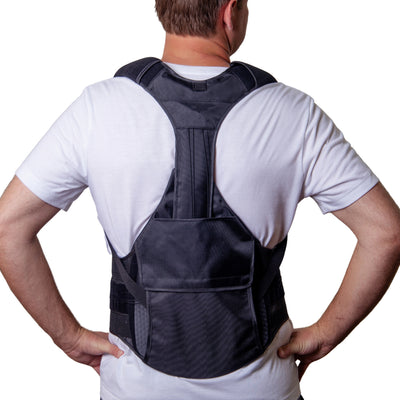
Reach the shoulder blades for fractures, kyphosis and upper back pain.

Narrow hip belts that steady the SI joints and pelvis.

Straps and panels that hold the shoulders back.

Ice packs and cold wraps that fit with your back brace.
Most back braces fit men and women and come in sizes based on waist or hip measurements. Many have removable panels, so you can start with firm support and step down as you heal.
Lower back pain is the most common reason people look for a back brace. AAOS OrthoInfo notes that almost every adult will have low back pain at some point, and in most cases it goes away on its own within a few weeks. A lumbar brace, also called an LSO, wraps the lower back and belly to steady the spine while you move.
For most people, a flexible LSO with a firm back panel is the best back brace to start with. It gives solid support for work, chores and driving without feeling bulky.
Sciatica is pain that travels from the lower back through the buttock and down the leg. It usually starts when a disc or bone spur presses on a nerve root in the lower back. A pinched nerve in the lower back, also called lumbar radiculopathy, can also cause numbness or tingling in the leg.
A lumbar brace can ease sciatica by limiting the bending and twisting that flare it up. Some people with pain low in the back and buttock do better with an SI belt.
Discs are the soft cushions between the bones of your spine. A herniated or bulging disc can press on a nerve, and degenerative disc disease is the slow wear of these cushions with age. Spondylolisthesis, when one vertebra slips forward over another, often shows up in the same part of the lower back.
A firmer LSO limits the bending and twisting that put pressure on a sore disc. Many people wear one for lifting, long drives or standing at work, then take it off to rest. As pain eases, most people need it less often.
Spinal stenosis is a narrowing of the space around the nerves in your spine. In the lower back it often causes leg pain or cramping when you stand or walk, which eases when you sit or lean forward. Arthritis of the spine, facet joint pain and spondylosis are common causes.
A lumbar brace can make standing and walking more comfortable by supporting the lower back. Many people with stenosis prefer a brace that lets them lean slightly forward, since bending forward often eases the pressure on the nerves. Seated breaks during long walks help too.
Upper and middle back pain sits between the base of the neck and the bottom of the ribs. Most of it comes from muscle strain and posture, such as long hours at a desk. A lower back brace stops at the waist, so it does little for pain between the shoulder blades.
A thoracic back brace, or TLSO, reaches up the back and uses shoulder straps to hold the shoulders back. It shares the load with tired upper back muscles and gives a gentle cue to sit tall at a desk or behind the wheel.
Kyphosis is a rounded upper back, lordosis is a deep inward curve in the lower back, and scoliosis is a sideways curve. In adults, many of these curves come from posture habits or wear and tear with age.
A posture back brace holds the shoulders back and reminds you to sit tall. It can ease muscle aches, but it won't reshape an adult spine. Wear it for set periods, and pair it with exercises that strengthen your back and core so your muscles keep doing their share.
A compression fracture is a small break in a vertebra, often from osteoporosis. These fractures happen about 1.5 million times a year in the US, according to AAOS OrthoInfo, and some patients wear a back brace to help the fracture heal. Rigid braces are also used after spinal surgery and some back injuries.
A TLSO is the usual choice for fractures in the middle of the back, while an LSO suits the lower back. Your doctor will tell you which brace you need and how long to wear it. Choose a front closure if bending to put on a brace is hard.
The sacroiliac, or SI, joints connect the base of your spine to your pelvis. Up to 25% of low back pain could come from the SI joint, according to a StatPearls review. SI pain often sits low in the back near the dimples above the buttocks and can spread to the hip.
An SI belt is a narrow belt worn around the hips, below the waist. It squeezes the pelvis gently to steady the joints, and it is popular during pregnancy too. Because it sits below the waist, it doesn't do the same job as a lower back brace.
A broken or bruised rib makes breathing, coughing and turning in bed painful. A rib belt is a soft elastic band that wraps around the lower chest. It gives gentle compression that many people find soothing while the area heals.
See a doctor first if you think a rib is broken, especially if you feel short of breath. Deep breathing matters while ribs heal, so a rib brace should feel snug but never stop you from taking a full breath. Take it off to sleep unless your doctor says otherwise.
LSO stands for lumbar sacral orthosis, a brace that supports the lower back from the base of the ribs to the hips. LSO braces are used for lower back pain, disc problems, spinal stenosis, sprains and recovery after lower back surgery. Most have a firm or rigid back panel and a belt that closes in front. Our LSO vs TLSO back brace comparison explains how to choose between them.
An LSO should sit low on your back, centered over the spine, with the belt closing across your belly. It should feel snug and supportive but still let you breathe and sit comfortably. That is the basic rule for how to wear a back brace of any type.
TLSO stands for thoracic lumbar sacral orthosis. It is a full back brace that reaches from the hips up to the shoulder blades, so it supports both the middle and lower back. TLSOs are used for compression fractures, kyphosis, upper back pain and recovery after spinal surgery. Our LSO vs TLSO back brace comparison explains how to choose between them.
A soft TLSO is made of flexible fabric with straps and gives light support for posture and a rounded upper back. A rigid TLSO uses firm panels to limit bending and twisting, and is the usual choice after a fracture. Is a TLSO the same as a full back brace? In most cases, yes.
Start with where it hurts and what your doctor said. Lower back pain, a compression fracture and SI joint pain need very different braces.
2Match the brace to the painful area. LSOs cover the lower back, TLSOs reach the shoulder blades, and SI belts sit around the hips.
3Check the size chart on the product page. Most back braces are sized by waist or hip measurement, and some come in one adjustable size.
Every back brace has its own size chart on its product page, so check it before you order. A back brace for women and a back brace for men usually come in the same styles, so choose by size and comfort. Many back braces are sized by waist or hip measurement, and some SI belts and universal braces adjust to fit a wide range. Sizes differ between brands and styles, so don't assume your size in one brace matches another. If you're between sizes, our team can help you choose.

Most back braces have an HCPCS code, the billing code Medicare and insurers use for medical equipment. We don't bill insurance, but you can submit your receipt to your insurer for possible reimbursement. Most of our braces are also HSA and FSA eligible.

US-based team, Monday to Friday
Not sure which back brace you need? Tell us where it hurts, what you do all day and what your doctor said. Our specialists can help you choose a size and style before you buy, and after your brace arrives you can use our fitting videos or book a virtual fitting session.
Unused items in their original packaging can be returned or exchanged within 30 days of purchase. See our Return Policy for details.
Contact Our TeamIt depends on where it hurts. For lower back pain, a flexible LSO is the best place to start. For pain between the shoulder blades, choose a TLSO, and for pain low in the back near the pelvis, choose an SI belt.
Suggested: Brace Align Adjustable LSO Back Brace or Brace Align GlideFit SI Belt
The main types are LSOs for the lower back, TLSOs for the middle and upper back, SI belts for the pelvis, and posture braces. Each type comes in flexible and rigid styles.
Usually not, unless your doctor prescribes it after a fracture or surgery. For most back pain, wear it during the activities that flare your pain and take it off to rest so your muscles keep working.
Most people take their brace off to sleep. After a fracture or spinal surgery, your doctor may ask you to wear it in bed, so follow their plan.
You can buy most of our back braces without a prescription. If you plan to submit a claim to your insurer, they may ask for one.
Medicare and other insurers may help pay for a back brace when a doctor orders it as medically necessary. We don't bill Medicare or insurance, but you can submit your receipt to your insurer for possible reimbursement.
LSO stands for lumbar sacral orthosis. It is a brace that supports the lower back from the base of the ribs to the hips.
Suggested: Brace Align Adjustable LSO Back Brace or Aspen Horizon 627 Lumbar Back Brace
LSO braces are used for lower back pain, sciatica, herniated and bulging discs, spinal stenosis, back sprains and recovery after lower back surgery.
Suggested: Brace Align VertebrAlign LSO Back Brace
An LSO covers the lower back only. A TLSO is taller and reaches the shoulder blades, so it also supports the middle and upper back.
Suggested: Brace Align ComfortCore TLSO Back Brace
A soft TLSO is flexible fabric with straps for light posture support. A rigid TLSO uses firm panels to limit motion, and is the usual choice after a fracture or surgery.
Suggested: Brace Align FeatherLite Soft TLSO Back Brace or Aspen Horizon 456 TLSO