
U.S-Based Expert Support
M–F 9a–5p EST
M–F 9a–5p EST
The best ankle brace for sprained ankle recovery is usually a lace-up or stirrup brace that stops the ankle from rolling while you heal, with a walking boot for more severe sprains. The same braces help weak and unstable ankles, and the right one depends on your sprain grade and your activity.

A brace limits the inward roll that causes most ankle sprains.
Side support makes stairs, curbs and uneven ground feel steadier.
A brace adds support as you get back to cutting, jumping and running.
An ankle sprain is a stretch or tear of the ligaments that hold the ankle bones together. Most happen when the foot rolls inward and the outer ligaments overstretch. AAOS OrthoInfo notes that around 90% of ankle sprains involve this kind of inversion injury.
Ankle sprains are very common. A review in the Journal of Athletic Training estimates that about 2 million acute ankle sprains occur in the US each year. They happen to people of all ages, not just athletes.
A sprain can be mild or severe. Some people walk it off in a few days, while others need weeks of support. Getting the right brace for your sprain makes recovery more comfortable and helps protect the ankle from another roll.

Most sprains come from a quick twist. What causes weak ankles is often a past sprain that never fully recovered.
Curbs, holes, stairs and stepping on someone's foot can roll the ankle in a split second.
Basketball, volleyball, soccer and trail running put the ankle at high risk.
Stretched ligaments and weak muscles leave the ankle less steady. AAOS notes that incomplete rehab is the most common cause of chronic ankle instability.
See a doctor if you can't put weight on the foot, if the ankle bones are tender, or if pain lasts more than a few weeks. A brace supports the ankle; it doesn't treat the cause.
An ankle brace helps anyone recovering from a sprain or living with an ankle that rolls too easily. These are the people we help most.
A brace protects the ligaments while they heal.
A brace adds support for cutting and landing.
A brace reduces that "giving way" feeling on uneven ground.
Light support can make walks and stairs feel steadier.
Warehouse, construction and retail jobs mean long hours on hard floors.
Uneven ground is where a past sprain shows up most.
An ankle brace for a sprained ankle protects the injured ligaments and limits the motion that caused the sprain. It still lets the ankle bend forward and back so you can walk.
Side supports or straps stop the ankle from tipping inward.
A snug fit helps manage swelling during the first weeks.
Many people feel more aware of ankle position with a brace on.
Braces for sprains range from light sleeves to firm boots. Here are the main types and when each makes sense.
Laces and often figure 8 straps. Moderate support that fits most shoes.
Rigid side shells, often with air or gel pads. Firm support against rolling.
Hinged side shells that allow forward motion. Popular for sports.
Light support and warmth for mild sprains and aches.
Firm protection for severe sprains in the first weeks.
Doctors grade sprains by how much the ligament is damaged. The grade guides how much support you need.
AAOS describes recovery in three phases, from rest and swelling control to strengthening and a gradual return to activity. It may take just 2 weeks for minor sprains, or up to 6 to 12 weeks for more severe injuries.

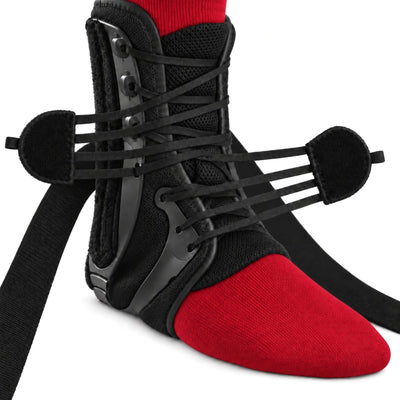
Is a lace-up or stirrup brace better for a sprain? Both work, and they suit different needs. A lace-up brace wraps the ankle like a shoe, and figure 8 straps add extra hold. It gives moderate support and fits well inside athletic shoes.
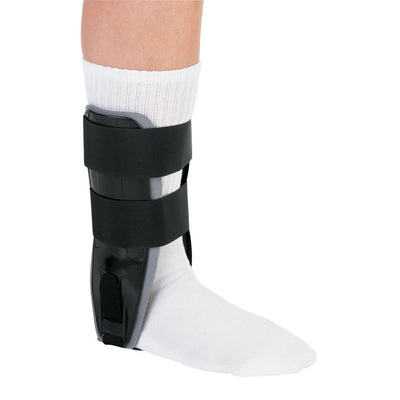
A stirrup brace has firm shells on each side of the ankle, often lined with air or gel cells. It blocks rolling more firmly and works well in the first weeks after a sprain. Many people start in a stirrup and move to a lace-up as they heal.

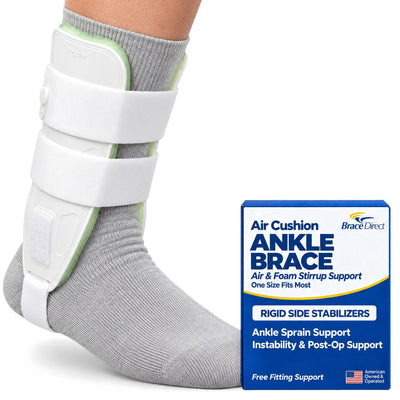
A high ankle sprain injures the ligaments above the ankle that join the tibia and fibula. It often happens when the foot twists outward, and it usually takes longer to recover than a regular sprain. AAOS notes that surgery may be recommended for some high ankle sprains with instability.
A high ankle sprain brace needs firm side support and often a strap around the lower leg. Many people start in a walking boot. Get a doctor's exam, since high ankle sprains are easy to miss.

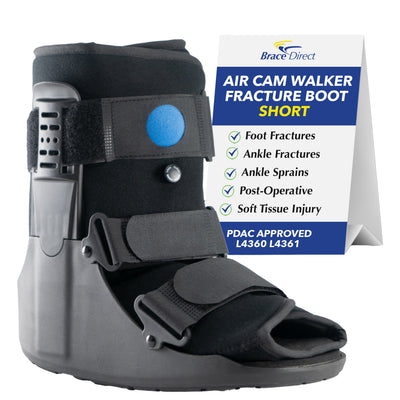
Do you need a walking boot for a sprained ankle? Usually only for moderate to severe sprains, or when walking is very painful. A boot holds the ankle still for a short time so the ligaments can settle.
Most people wear a boot for a short period, then move to a stirrup or lace-up brace. Wearing a boot longer than needed can leave the ankle stiff and weak, so follow your doctor's plan.
An ankle brace for torn ligaments needs more than a sleeve. Partial and complete tears do best with a semi-rigid, stirrup or reinforced lace-up brace once the first painful days pass. AAOS notes that even a complete ligament tear will heal without surgical repair if it is immobilized and rehabilitated.
Physical therapy is key. Balance and strengthening work rebuild the muscles that protect the ankle, and the brace supports you while that happens.

How long to wear an ankle brace after a sprain depends on the grade. Many people wear it full time for the first few weeks, then for sports and uneven ground for a few months. Your doctor or therapist will set your plan.
Should you sleep with an ankle brace on? Usually not, unless your doctor asks you to. Most braces are made for walking and activity. At night, rest the ankle raised on a pillow.
A first sprain makes another one more likely. The Journal of Athletic Training review reports that, in one group of military cadets, those with a past ankle sprain had about 3.5 times greater risk of another sprain. That is why many athletes brace after a sprain.
Bracing can help prevent new injuries too. In a study of 1,460 high school basketball players summarized by ACFAS, the rate of acute ankle injury was 0.47 per 1,000 exposures in the braced group and 1.41 in the unbraced group.
The first days after a sprain are about calming swelling. AAOS OrthoInfo recommends ice for 20 to 30 minutes, 3 or 4 times daily, and elevating the ankle above your heart as often as possible during the first 48 hours. Compression wraps or a snug brace help support the ankle.
Once you can walk, a brace protects the ligaments while you get moving again. Ice packs and cold wraps for the ankle can make those first days more comfortable.
Chronic ankle instability means the ankle keeps rolling or giving way, often after a sprain that never fully recovered. The Journal of Athletic Training review notes that up to 70% of people who sprain the outer ankle may develop it. Why does your ankle keep rolling? Usually stretched ligaments plus weak muscles and poor balance.
The best ankle brace for chronic ankle instability gives firm side support and fits your daily shoes. Lace-up braces with figure 8 straps and semi-rigid stabilizers are the most common choices. Will wearing a brace weaken your ankle? Not if you keep up strengthening and balance work alongside it.

Weak ankles usually come from past sprains, low activity, loose ligaments or nerve problems that affect balance. Aging and long periods of rest can also reduce strength in the muscles that steady the ankle.
Do ankle braces help weak ankles? Yes, a light lace-up or compression brace can make walking feel steadier. For older adults, a low-profile brace inside a supportive shoe often works well. The best long-term step is strengthening: heel raises, balance work and ankle circles, as your therapist advises.
Not always. A mild foot sprain often improves with rest, ice and supportive shoes. A more painful sprain may need a stiff-soled shoe or boot that limits bending through the middle of the foot.
How do you know if your foot is sprained or broken? You often can't tell without an X-ray. Pain right on the bone, trouble bearing weight and swelling across the top of the foot all need a doctor's check, since a midfoot injury can be more serious than it looks.


Try the brace with the shoes you'll use most, and loosen laces if needed.
Tighten laces and straps until the ankle feels held, not squeezed.
A sock under the brace prevents rubbing and keeps it clean.
The brace protects you while exercises rebuild strength and balance.
Many ankle braces for sprains and instability have an HCPCS code, the billing code Medicare and insurers use for braces. We don't bill insurance, but you can submit your receipt to your insurer for possible reimbursement. Most of our braces are also HSA and FSA eligible.

US-based team, Monday to Friday
Not sure which ankle brace fits your sprain? Tell us how it happened, how it feels to walk and what shoes or sport you need it for. Our specialists can help you choose a size and style before you buy, and after your brace arrives you can use our fitting videos or book a virtual fitting session.
Unused items in their original packaging can be returned or exchanged within 30 days of purchase. See our Return Policy for details.
Contact Our TeamFor most sprains, a lace-up or stirrup brace that stops the ankle from rolling. Severe sprains may start in a walking boot and move to a brace.
Suggested: Brace Direct Semi-Rigid Active Ankle Brace or Breg Adjustable Lace-Up Ankle Support Brace
Yes, for most sprains. A brace protects the healing ligaments and makes walking more comfortable. Pair it with ice, elevation and the exercises your doctor recommends.
It depends on the grade. Many people wear it full time for a few weeks, then for sports and uneven ground for a few months. AAOS notes recovery takes 2 weeks for minor sprains and up to 6 to 12 weeks for severe ones.
Usually only for a moderate or severe sprain, or when walking is very painful. A boot is short term, and most people step down to a brace.
Stirrup braces give firmer side support early on. Lace-up braces give moderate support and suit sports and daily wear. Many people use a stirrup first, then a lace-up.
Suggested: Brace Direct Air Stirrup Ankle Brace
Usually not, unless your doctor asks. Most braces are made for activity. Rest the ankle raised on a pillow at night.
A brace with firm side support and a strap around the lower leg, often after a short time in a boot. See a doctor, since high ankle sprains take longer to recover.
For most mild and moderate sprains, yes, once walking is not too painful. If you can't bear weight, see a doctor before walking on it.
Suggested: Brace Align Semi-Rigid Active Ankle Brace