
U.S-Based Expert Support
M–F 9a–5p EST
M–F 9a–5p EST
There are several types of knee braces, and each does a different job: sleeves add compression, hinged braces steady a loose knee, unloaders ease arthritis and post-op braces protect the knee after surgery. Knowing what kind of knee brace you need starts with your condition and how you plan to use it.

Knee pain is one of the most common reasons people look for a brace. AAOS OrthoInfo notes that wearing a brace or knee sleeve can be helpful for knee arthritis, and braces play a role in ligament, kneecap and post-surgery care too. The hard part is knowing how to choose a knee brace when there are so many styles.
This guide covers the main types of knee braces, the conditions they help and when to wear a knee brace. Each condition section links to a full guide if you want to go deeper.
Knee pain by the numbers
Knee braces fall into five main groups. Some add light compression, some control how the knee moves, and some protect an injury or repair. Knowing which group fits your problem narrows your choice fast.
Most knee braces come in adult sizes, and many come in plus sizes too. Some fit either knee, while others are made for the left or right side, especially unloaders.
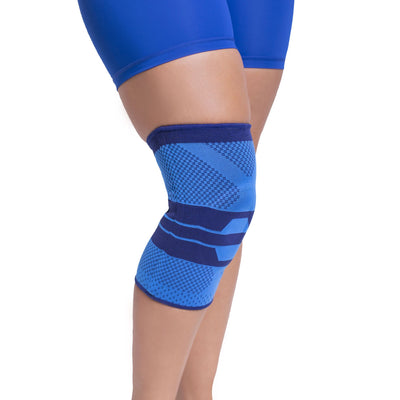
Pull-on warmth and support for mild aches and sports.

Side hinges for knees that feel loose or give way.
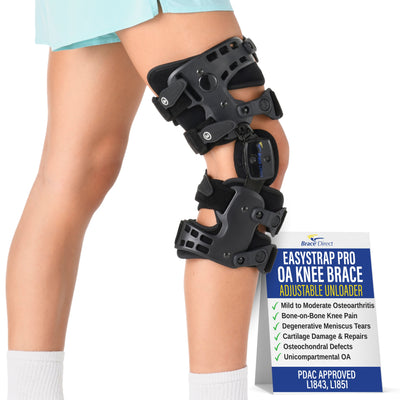
Shift weight off the worn side for knee arthritis.
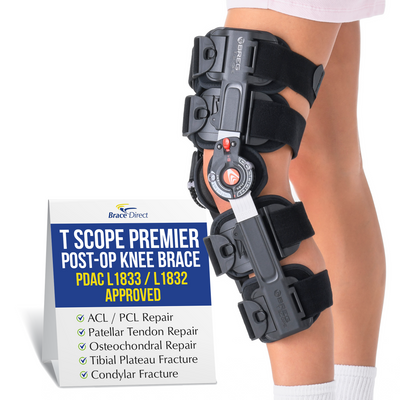
Protect the knee after surgery or a fracture.
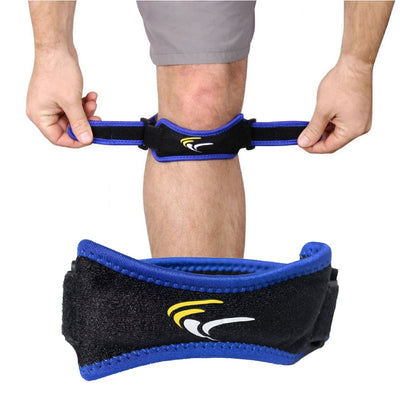
Light bands that ease tendon pain below the kneecap.
Knee osteoarthritis wears down the cartilage that cushions the joint. It causes aching, stiffness and swelling that often get worse after activity. It is very common: the CDC reports that about 33 million US adults have osteoarthritis.
AAOS OrthoInfo describes two main brace types for knee arthritis. An unloader brace shifts weight away from the worn part of the knee, while a support brace helps carry the whole knee load.
Arthritis pain often sits on the inner side of the knee, which carries more weight with each step. If that matches your pain, an unloader is usually the first brace to try. A brace eases strain, but exercise and a healthy weight still matter.
The meniscus is a C-shaped pad of cartilage between the thighbone and shinbone. It can tear with a sudden twist or wear down slowly with age. A tear often causes pain on one side of the knee, swelling and catching.
A compression sleeve is a good start for a mild or degenerative tear. Step up to a hinged brace if the knee feels unstable, or an unloader if you also have arthritis.
See a doctor if your knee locks, won't fully straighten or gives way. Those signs can mean a larger tear. For most smaller tears, a brace makes walking, stairs and work more comfortable while the knee settles.
The knee has four main ligaments: the ACL, PCL, MCL and LCL. ACL tears are common in sports with sudden stops and pivots. AAOS OrthoInfo reports more than 200,000 ACL injuries a year in the US.
A functional knee brace with rigid hinges helps control the knee after an ACL tear. Hinged sleeves and wraps suit many MCL and LCL sprains.
After ACL surgery, most people start in a hinged post-op brace before moving to a functional brace. Recovery takes months, and your surgeon decides when you can return to sports. A brace adds control, but rehab builds the strength that protects the knee.
Patellofemoral pain is an ache around or behind the kneecap. It is often called runner's knee and is often linked to a kneecap that tracks off center. A review in PLoS ONE reported a yearly prevalence of 22.7% in the general population.
A patella stabilizer knee brace uses a J or horseshoe buttress to guide the kneecap. It eases pressure at the front of the knee during stairs, squats and runs.
Runners, court athletes, teens and people who kneel at work see this pain most often. Weak hip and thigh muscles can let the kneecap drift. A brace works best alongside a strengthening plan from your therapist.
Patellar tendonitis, or jumper's knee, causes pain in the tendon just below the kneecap. It is common in basketball, volleyball and other jumping sports. Pain often starts during hard workouts and lingers after.
A patellar tendon strap presses lightly on the tendon to spread out the force of each jump. A sleeve with patella support adds broader compression.
Most athletes wear a strap only for practice, games and runs. If the pain grows week to week or changes how you move, rest and see a doctor. Teens with pain at the bump below the knee may have Osgood-Schlatter disease.
A knee fracture can involve the kneecap, the top of the shinbone or the lower thighbone. Most need a doctor's plan first, sometimes surgery. The brace then protects the bone while it knits.
A knee immobilizer or a hinged brace locked straight is the usual first step. A hinged ROM brace can later unlock to allow more bending.
Go to an emergency room if your foot turns pale, cold or numb after a knee injury. Once your doctor has a plan, the right brace makes getting around at home safer. Ask your surgeon how long to keep the knee straight.
After ACL, meniscus or kneecap surgery, most people wear a hinged ROM brace. Dials at the hinge lock the knee straight or set a bending range. Your surgeon changes the settings as you recover.
Many knee replacements need little bracing, and some surgeons use an immobilizer for the first days. Ice and a walker often matter more.
Plan ahead before surgery day: get your brace, set up a way to ice and clear a path through the house. Never change the hinge settings on your own. Ask at each visit whether they should change.
Knee bursitis is swelling of a small fluid sac near the kneecap. It often comes from kneeling a lot or a direct hit to the front of the knee. The front of the knee may look puffy and feel tender.
A soft knee brace for bursitis adds gentle compression and cushioning. Kneeling pads and avoiding pressure on the knee help too. See a doctor if the knee turns red, hot or you have a fever.
Plumbers, gardeners, carpet layers and anyone who kneels a lot are at higher risk. A cushioned kneeling pad protects the knee at work and at home. Most bursitis settles with rest from kneeling and simple care.
The iliotibial band runs along the outside of the thigh to just below the knee. In IT band syndrome, it rubs and irritates the outer knee, often in runners and cyclists. The pain usually builds partway through a run.
A knee brace for IT band syndrome can add support around the kneecap and outer knee during activity. Stretching, hip strengthening and easing back on mileage are key.
IT band pain is often confused with other outer knee problems. If it doesn't settle with rest and stretching, have a doctor or therapist take a look. A foam roller and hip exercises are common parts of the plan.
A knee sleeve is a pull-on tube of knit or neoprene. It gives warmth, compression and a sense of support for mild aches, arthritis and sports. A knee brace adds parts a sleeve doesn't have, such as hinges, straps or a buttress.
Choose a sleeve if your knee aches but feels stable. Choose a brace if it feels loose, gives way, or you have a ligament injury.
Many people start with a sleeve and step up to a brace only if they need more support. A thin sleeve also works as an undersleeve, adding comfort and grip under a hinged brace. Check the size chart so the sleeve doesn't roll down.
"Knee stabilizer" usually means a sleeve or wrap with built-in side stays or hinges. It sits between a plain sleeve and a rigid brace. A patella stabilizer is different; it guides the kneecap rather than the whole joint.
A stabilizer suits mild instability, arthritis and sprains. If you need firm ligament support, step up to a rigid hinged brace.
Stabilizers are a popular middle ground because they are easy to wear under pants and through a work day. If your knee still feels unsteady in a stabilizer, a rigid hinged brace or functional brace is the next step.
A wrap around knee brace opens flat and closes with hook and loop straps. You don't have to pull it over your foot, which helps with swelling, stiff hips or a bulky bandage.
The best wrap around knee brace for most people has hinges on both sides and adjustable straps. Wraps suit sprains, arthritis and mild instability.
Wraps are also a good fit for older adults and anyone with limited hand strength, since there is no tight sleeve to pull on. Ask your surgeon before using a wrap after surgery, since many surgeons prefer a ROM brace at first.
Start with where it hurts and why. Arthritis, a ligament tear and kneecap pain need very different braces.
2Match support to need: a sleeve for mild aches, a hinged brace for a loose knee, an unloader for one-sided arthritis, a ROM brace after surgery.
3Use the size chart on the product page. Knee braces are sized in different ways, so check the chart for the exact brace you want.
Every knee brace has its own size chart on the product page, so check it before you order. Sizing differs by brace and manufacturer, and some braces are made for the left or right knee. If you're between sizes or unsure which chart applies, our team can help you choose.
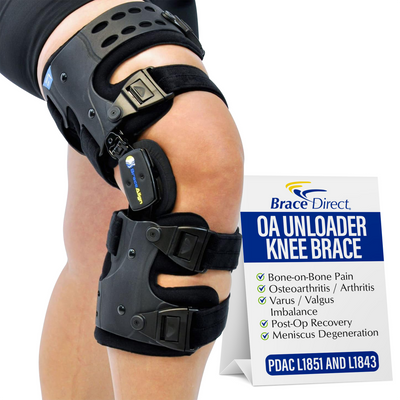
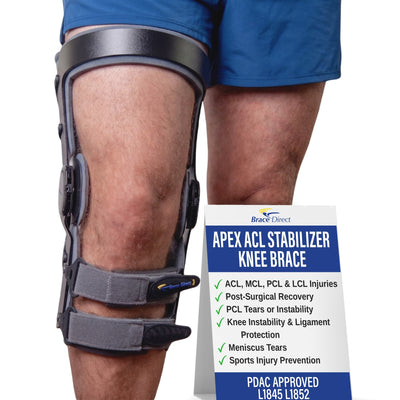
Many knee braces have an HCPCS code, the billing code Medicare and insurers use for medical equipment. We don't bill insurance, but you can submit your receipt to your insurer for possible reimbursement. Most of our braces are also HSA and FSA eligible.

US-based team, Monday to Friday
Tell us what's going on with your knee and we'll help you find the right brace. Our specialists can help you choose a size and style before you buy, and after your brace arrives you can use our fitting videos or book a virtual fitting session.
Unused items in their original packaging can be returned or exchanged within 30 days of purchase. See our Return Policy for details.
Contact Our TeamThe main types are compression sleeves, hinged braces, unloader braces, post-op ROM braces and immobilizers, and patellar straps and stabilizers. Each one fits a different condition and level of support.
Start with your condition. Arthritis often calls for an unloader or sleeve, ligament injuries for a hinged brace, kneecap pain for a patella stabilizer, and surgery for a ROM brace.
Suggested: Brace Align EasyStrap Pro OA Knee Brace or Brace Align Apex ACL Stabilizer Knee Brace
For many people, yes. A brace can support the joint, guide the kneecap or shift weight off a sore area. It eases strain but doesn't treat the cause, so pair it with your doctor's plan.
Wear it during the activities that strain your knee, such as walking, sports or work. After surgery, wear it as your surgeon directs.
Usually only if your surgeon asks you to, such as after ligament or meniscus repair. Otherwise, most people take the brace off at night.
Each product page has its own size chart, because sizing differs by brace and manufacturer. Check the chart for the exact brace you want before you order.
A sleeve suits mild aches and a stable knee. A brace suits a knee that feels loose, gives way or is recovering from an injury.
Suggested: Brace Direct Sport Compression Sleeve or Brace Direct Neoprene Hinged Knee Brace
Many people find a sleeve eases aches and makes the knee feel more secure, especially with mild arthritis or during sports. A sleeve won't give the control of a hinged brace.
Suggested: Bauerfeind GenuTrain Knee Brace
A knee stabilizer is usually a sleeve or wrap with side stays or soft hinges. A rigid knee brace has a firm frame and gives more control.
Suggested: Breg Lateral Stabilizer with Hinge Soft Knee Brace
It opens flat, so it is easy to put on over swelling or a bandage. Hinged wraps suit sprains, arthritis and mild instability.
Suggested: Ossur Neoprene Hinged Knee Wraparound Brace