
U.S-Based Expert Support
M–F 9a–5p EST
M–F 9a–5p EST
The best shoulder brace depends on your condition: a sling for rotator cuff pain and sprains, an abduction sling after surgery, and a stabilizer for a shoulder that slips out. This guide compares the types of shoulder braces and helps you choose the right shoulder support brace.

Shoulder problems are common. Almost 2 million people in the U.S. see a doctor each year for rotator cuff tears alone, according to AAOS OrthoInfo. Many shoulder injuries improve with rest, therapy and the right support, and a brace can make daily life, work and sleep easier while you recover.
This guide covers the main shoulder braces for men and women, the conditions they help and how to choose. Each condition section links to a full guide if you want to go deeper.
Shoulder pain by the numbers
Shoulder braces fall into five main groups. Some hold the arm still, some support it while you move, and some cool the joint after surgery or injury. Knowing which group fits your problem narrows your choice fast.
Most shoulder braces fit either the left or right arm, and many come in sizes for men, women and children. Some, like stabilizers, are made for one side, so check before you order.

Rest the arm for sprains, fractures and flare-ups.

Keep the arm close and still after a dislocation.
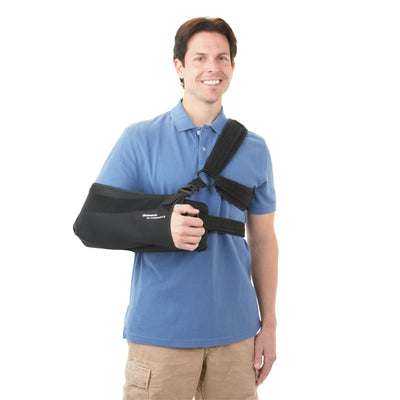
Hold the arm out from the body after surgery.

Limit risky motion for instability and sports.

Ice machines and wraps ease pain and swelling.
The rotator cuff is a group of muscles and tendons that holds the ball of the upper arm in its socket. Tears are very common: almost 2 million people in the U.S. visit their doctors each year because of them, according to AAOS OrthoInfo. Most tears come from slow wear, and pain is often worse at night.
A sling or immobilizer worn for short periods rests the shoulder during flare-ups and can keep you from rolling onto it in bed. Most people improve with nonsurgical care, so pair the brace with the exercises your therapist gives you.
Frozen shoulder causes pain and stiffness that slowly limit motion. It most commonly affects people between the ages of 40 and 60, and women more often than men, according to AAOS OrthoInfo. Tendonitis and bursitis are irritation of the tendons and the fluid sacs that cushion them.
These conditions need movement more than a firm brace, because holding the shoulder still can add to stiffness. Many people get more relief from cold compression after stretching or activity, which eases soreness so they can keep moving.
Shoulder arthritis wears down the cartilage in the ball-and-socket joint or the AC joint on top of the shoulder. Pain usually gets worse with activity, and night pain is common. Osteoarthritis is most common after age 50.
A flexible, supportive brace can make the shoulder feel steadier during daily tasks without locking it in place. Ice, moist heat, activity changes and therapy all help, and advanced arthritis may lead to a talk about shoulder replacement. Many people use a brace mainly for chores, travel and long days.
After rotator cuff repair, labrum repair or shoulder replacement, the arm needs to stay protected while it recovers. Most surgeons send patients home in a sling, often an abduction sling with a pillow that holds the arm slightly out from the body.
Your surgeon decides the style and how long to wear it. Cold therapy also helps many people manage pain and swelling in the first weeks home, and sleeping propped up keeps you off the shoulder. Ask your care team to check the sling fit before you go home.
A dislocation happens when the ball of the upper arm comes out of the socket. Shoulder dislocations are relatively common, and AAOS OrthoInfo notes that people who have dislocated a shoulder before have a high risk of doing it again.
After the shoulder is put back in place, a shoulder immobilizer keeps the arm close to the body until your follow-up visit. Then physical therapy restores motion and strength, and some people move to a stabilizer brace for activity.
Shoulder instability means the joint slips partly or fully out of place, often after a past dislocation or years of overhead sports. A torn labrum, the rim of cartilage around the socket, often goes along with it.
A shoulder stabilizer brace limits how far the arm lifts and turns out, the position where most shoulders slip. Athletes often wear one when they return to contact sports, and it fits under pads. Strength work in therapy is just as important, since strong muscles help hold the ball in the socket.
A shoulder sprain stretches or tears a ligament, most often at the AC joint where the collarbone meets the top of the shoulder. This injury is also called a shoulder separation, and it usually comes from a fall onto the shoulder.
Most people return to normal function without surgery. A simple arm sling rests the shoulder while pain settles, and ice helps in the first days. Your doctor will tell you when it is safe to return to sports.
A broken collarbone accounts for about 5% of all adult fractures, according to AAOS OrthoInfo. Many heal without surgery, with a simple sling for comfort. Breaks near the top of the upper arm are also usually treated in a sling.
Some people also use a figure 8 or front closure clavicle brace, which gently draws the shoulders back. Healing can take several months, and your doctor will follow it with X-rays and tell you when you can lift again. Gentle elbow and hand motion keeps the rest of the arm from stiffening.
The brachial plexus is the network of nerves that runs from the neck to the arm. An injury to it, or weakness after a stroke, can leave the shoulder muscles unable to hold the arm up. The weight of the arm can then pull the ball partly out of the socket.
A shoulder orthosis supports the arm and helps keep the joint in place during daily activities and therapy. Your therapist will help set the fit and wearing schedule so it supports your rehab plan.
Cold therapy eases pain and swelling after shoulder surgery or an injury. An ice machine circulates cold water through a pad that wraps the shoulder, so the cold stays steady without refilling ice bags.
Air pump cold wraps add gentle compression for sore tendons and sprains. Always keep a thin layer between the pad and your skin, and follow your surgeon's or doctor's plan for how long to use it. Many people keep a unit by the recliner or bed for the first weeks.
Start with what is causing your pain. Which shoulder brace you need for your condition depends on whether it is a tendon problem, a dislocation, a fracture or surgery.
2Choose a sling or immobilizer to hold the arm still, a stabilizer to move with support, or cold therapy to ease pain and swelling.
3Use the size chart on the product page. Shoulder braces are sized by measurements such as chest, arm or forearm length, and these differ by maker.
Every shoulder brace has its own size chart on the product page, so check it before you order. Slings are often sized by forearm length, while stabilizers and immobilizers may use chest or arm size. Check whether the brace fits either arm or is made for the left or right side. If you are between sizes, our team can help you choose.

Many shoulder slings, immobilizers and stabilizers have an HCPCS code, the billing code Medicare and insurers use for medical equipment. We don't bill insurance, but you can submit your receipt to your insurer for possible reimbursement. Most of our braces are also HSA and FSA eligible.

US-based team, Monday to Friday
Tell us what's going on with your shoulder and we'll help you find the right brace. Our specialists can help you choose a size and style before you buy, and after your brace arrives you can use our fitting videos or book a virtual fitting session.
Unused items in their original packaging can be returned or exchanged within 30 days of purchase. See our Return Policy for details.
Contact Our TeamIt depends on the cause. A sling suits rotator cuff flare-ups and sprains, an immobilizer suits a recent dislocation, an abduction sling is used after surgery, and a stabilizer helps an unstable shoulder during activity.
A sling or immobilizer worn for short periods during flare-ups is a good place to start. Pair it with the exercises your therapist recommends.
Yes. Many people sleep in a sling after an injury or surgery, and it keeps you from rolling onto the sore side. Sleeping propped up on pillows or in a recliner helps too.
Suggested: Breg Slingshot 3 Shoulder Brace
Each product page has its own size chart, because sizing differs by brace and manufacturer. Our team can help if you are between sizes.
Low profile stabilizers and compression braces can fit under a loose shirt. Slings and immobilizers are usually worn over clothing.
Suggested: Bauerfeind OmoTrain Shoulder Brace
You can buy most of our shoulder braces without a prescription. If you plan to submit a claim to your insurer, they may ask for one.
Most shoulder braces are unisex and sized by measurements, not gender. Check the size chart on each product page to find your fit.
Snug but not tight. You should be able to slide a finger under each strap, and your hand should never feel numb, tingly or cold.
Yes. Many of our slings and stabilizers have an HCPCS code. We don't bill insurance, but you can submit your receipt to your insurer for possible reimbursement.