
U.S-Based Expert Support
M–F 9a–5p EST
M–F 9a–5p EST
The best neck brace depends on what is causing your pain: a soft neck brace for strain and whiplash, a rigid cervical neck brace after surgery, and traction for disc and nerve pain. This guide compares the types of neck braces and helps you match one to your condition.

Neck pain is common, affecting 10% to 20% of adults, according to Cleveland Clinic. Most of it comes from strained muscles and age-related wear, and it often eases with simple care. A medical neck brace can be a helpful part of that care when you use the right type for the right amount of time.
This guide covers the main neck support braces, the conditions they help and how to choose. Each condition section links to a full guide if you want to go deeper.
Neck pain by the numbers
Neck braces fall into five main groups. Some give light support for comfort, some hold the neck firmly after surgery, and some gently stretch it. Knowing which group fits your problem narrows your choice fast.
Most neck braces come in adult sizes, and some come in children's sizes. Many collars adjust in height, so one collar can fit a range of neck lengths.

Foam collars for strain, whiplash and short flare-ups.
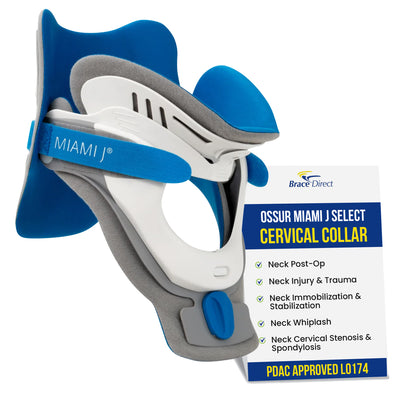
Firm shells with padding for surgery and nerve pain.
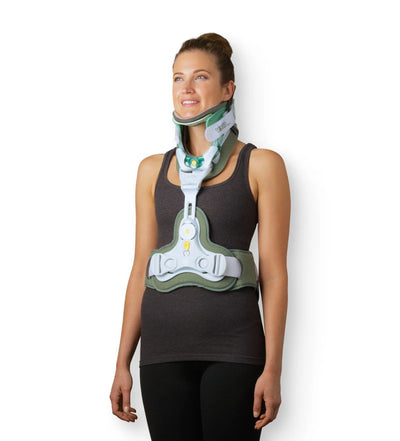
A collar joined to a chest piece for firm control.
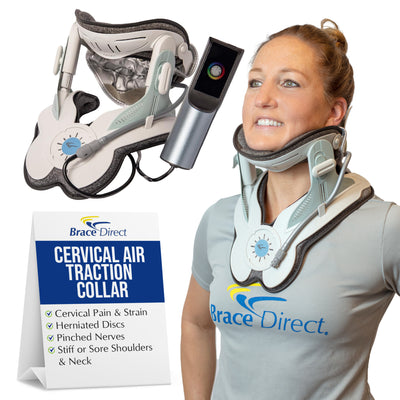
Air collars and units that gently stretch the neck.
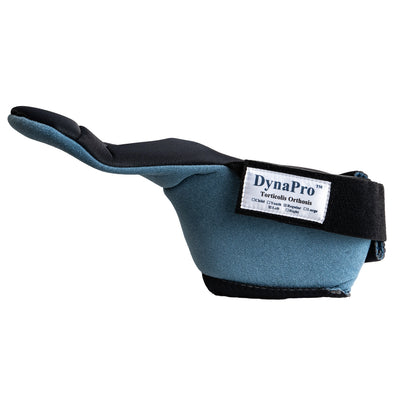
Adjustable braces that support a neutral head position.
As discs in the neck wear down with age, they can flatten, bulge or herniate and press on nearby nerves. That can cause neck pain, stiffness and pain that spreads toward the shoulder blade or arm. Many people with worn discs have no symptoms at all.
A neck brace helps disc pain most when you wear it for short periods during flare-ups. A soft collar rests the neck on sore days, while a semi-rigid collar limits the bending and turning that set off arm pain. Long wear can weaken neck muscles, so pair it with the exercises your therapist suggests.
A pinched nerve in the neck, called cervical radiculopathy, happens when a nerve root is squeezed where it leaves the spine. It often causes burning pain, tingling or weakness down one arm. Most people get better over time with simple care.
Short collar wear can rest the neck while the nerve settles. Home traction is another option: it gently lifts the head to take pressure off the nerve roots. Ask your doctor or therapist which approach fits your symptoms, and how often to use it.
Cervical spondylosis is the medical name for arthritis of the neck. It is very common with age: more than 85% of people over 60 are affected, according to AAOS OrthoInfo. Most have no symptoms, and when symptoms do show up, neck pain and stiffness are the most common.
A soft collar worn for a few hours on stiff, sore days can make chores and errands easier. Gentle movement, heat and stretching matter just as much, because arthritis pain often eases as the neck warms up and moves.
Most neck pain comes from strained or tired muscles after sleeping wrong, lifting or a long day at a desk. Neck pain affects 10% to 20% of adults, according to Cleveland Clinic, and pain from a strain usually improves within a week or two.
A soft neck brace takes some weight off sore muscles and reminds you to keep your head level. Wear it for a few hours at a time during flare-ups, then take it off to move and stretch. Stop using it once the pain settles.
Looking down at a phone or laptop for hours makes the muscles at the back of the neck work harder. Mayo Clinic notes that poor posture, such as leaning over a computer, strains neck muscles. Over time, this habit is often called text neck or tech neck.
No brace can reshape your posture. Raising your screen to eye level, taking breaks and strengthening your upper back do most of the work. For soreness at the end of the day, a home traction device can gently stretch tight muscles while you rest.
Whiplash is a neck injury from a fast back-and-forth jolt, most often in a rear-end car crash. Symptoms usually start within days and include neck pain, stiffness and headaches. Mayo Clinic says most people who have whiplash feel better within a few weeks.
A soft collar can ease pain for a short time after the injury, but keeping the neck still for long periods can slow recovery. Get checked by a doctor first to rule out a fracture, then follow their plan for collar use, movement and heat or ice.
After neck surgery such as ACDF, many surgeons ask patients to wear a rigid cervical collar while the bones begin to fuse. A rigid collar has firm front and back shells with padding and supports under the chin and at the back of the head.
Your surgeon decides whether you need a collar, which style and how long to wear it. Some patients need a cervical thoracic brace that also covers the chest and upper back. Spare pads let you keep a clean, dry collar every day.
A neck traction device gently lifts the head away from the shoulders to open the spaces between the neck bones. Therapists use traction for disc and nerve pain, and home devices let you do short sessions on your own schedule.
Air traction collars are light and work sitting up, while digital and pneumatic units stretch the neck while you lie down. Research shows a small benefit when traction is added to other care, so use it as one part of your plan and ask your doctor first.
Torticollis means the neck muscles pull the head into a twisted or tilted position. In adults it can come from muscle spasm, nerve conditions or injury. A neck contracture is tightness that limits how far the neck can move, sometimes after a long period of limited motion.
A torticollis orthosis supports the head in a more neutral position and can hold a gentle, steady stretch. It is used alongside the stretching, therapy or other treatment your doctor recommends, and fit is adjusted over time.
Start with what is causing your pain. Which neck brace you need for your condition depends on whether it is strain, disc or nerve pain, an injury or surgery.
2Choose a soft collar for comfort and short wear, a rigid collar when your doctor wants motion limited, or traction for a gentle stretch at home.
3Use the size chart on the product page. Neck braces are sized by measurements such as neck height and neck around, and these differ by maker.
Every neck brace has its own size chart on the product page, so check it before you order. Collars are sized differently by each manufacturer, and many have adjustable height so they sit right without pushing your chin up. If your surgeon or therapist gave you a size, use it. If you are between sizes, our team can help you choose.

Many medical neck braces, from rigid collars to torticollis orthoses, have an HCPCS code, the billing code Medicare and insurers use for medical equipment. We don't bill insurance, but you can submit your receipt to your insurer for possible reimbursement. Most of our braces are also HSA and FSA eligible.

US-based team, Monday to Friday
Tell us what's going on with your neck and we'll help you find the right brace. Our specialists can help you choose a size and style before you buy, and after your brace arrives you can use our fitting videos or book a virtual fitting session.
Unused items in their original packaging can be returned or exchanged within 30 days of purchase. See our Return Policy for details.
Contact Our TeamThe main types are soft collars, rigid and semi-rigid collars, cervical thoracic braces, traction devices and torticollis orthoses. Soft collars are for comfort, rigid collars limit motion after surgery, and traction gently stretches the neck.
A soft collar suits strain, whiplash and short flare-ups. A hard, or rigid, collar is used when a doctor wants motion limited, such as after surgery or a serious injury.
Suggested: Brace Direct Soft Cervical Collar or Ossur Miami J Select Cervical Collar Adjustable Neck Brace
Match the brace to the cause: a soft collar for strain, a semi-rigid collar or traction for disc and nerve pain, a rigid collar after surgery and a torticollis orthosis for a twisted neck. Our neck braces by condition collection groups them for you.
A semi-rigid collar worn for short periods can rest the neck, and home traction can ease pressure on the nerve. Ask your doctor which fits your symptoms.
Suggested: Aspen ComforTrac Cervical
Each product page has its own size chart, because sizing differs by brace and manufacturer. Our team can help if you are between sizes.
You can buy most of our neck braces without a prescription. If you plan to submit a claim to your insurer, they may ask for one.
For strain or arthritis, most people wear a soft collar for a few hours at a time during flare-ups. After surgery, follow your surgeon's schedule, which may include wearing it all day and night.
A soft collar can help some people sleep through a painful night, and many surgeons ask you to sleep in a rigid collar after surgery. Use a thin pillow to keep your neck in line.
Suggested: Brace Direct Soft Cervical Collar
Snug but not tight. You should be able to swallow, talk and breathe comfortably, and the collar shouldn't push your chin up or leave marks that last.
Yes. A torticollis orthosis supports the head in a more neutral position and is used with the therapy your doctor recommends.
Suggested: OCSI DynaPro Torticollis Orthosis