
U.S-Based Expert Support
M–F 9a–5p EST
M–F 9a–5p EST
The main types of walking boots are tall boots, short boots and air (pneumatic) boots, and a post-op shoe is the lighter option for many toe and forefoot injuries. The right one depends on where the injury is, how much support your doctor wants and how much swelling you have.

A rigid shell and straps keep the foot and ankle still so the injury is not stressed with each step.
A rocker-style sole lets you walk on the injured foot once your doctor says it is safe.
Straps and air cells let you snug or loosen the fit as swelling goes up and down.
A walking boot is a removable brace that holds the foot and ankle steady while an injury heals. It has a rigid frame, a padded liner, wide straps and a curved rocker sole. You can take it off to sleep, bathe or check your skin when your doctor allows it.
Doctors use walking boots in place of a cast for many fractures, bad sprains and tendon injuries. AAOS OrthoInfo notes that an ankle fracture that stays in place can often be treated with a short leg cast or walking boot. A boot also makes it easier to keep the area clean and to adjust the fit as swelling changes.
Knowing the types of walking boots helps you understand what your doctor ordered. It also helps you pick a sensible replacement if your first boot wears out or does not fit well.
Walking boots cover a wide range of foot and ankle problems. These are the most common reasons people are told to wear one.
Broken ankles, broken metatarsals and some broken toes. A boot holds the bone still while it knits back together.
Moderate to severe ankle sprains, Achilles injuries and painful tendons that need a break from stress.
After bunion, ankle, tendon or ligament surgery, a boot protects the repair as you start walking again.
See a doctor before you choose a boot on your own. Severe pain, a foot that looks out of place, numbness or trouble bearing weight all need an exam and often an X-ray. A boot supports healing; it doesn't treat the injury on its own.
Most people who wear a walking boot fall into one of these groups.
A boot lets many stable fractures heal without a hard cast.
Higher-grade sprains often need a few weeks of firm support before a brace.
A boot protects the repair once the first splint or cast comes off.
A tall boot can take strain off the tendon while it calms down or heals.
A boot cuts the repeated force that caused the crack in the first place.
A boot with a wide, flat base can feel steadier than a cast.
A walking boot works by limiting motion and spreading out the force of each step. The frame keeps the ankle near a neutral angle, and the rocker sole rolls you forward without bending the foot.
Side struts or a full shell stop the ankle from rolling or bending too far.
The wide footplate and rocker sole move pressure away from the injured bone.
Air cells or a snug liner add gentle compression around the foot and ankle.
Walking boots differ by height, by whether they use air, and by how much of the leg they cover. Here is how the main types compare.
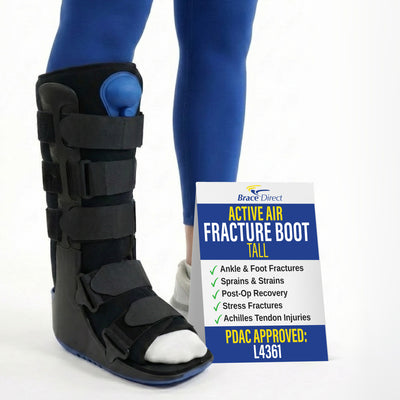
Reaches just below the knee. Gives the most support for ankle and lower leg injuries.
Ends near mid-calf or above the ankle. Lighter and easier to walk in for foot and toe injuries.
Has air cells you pump up for a snug fit and gentle compression.
A hard shell wraps the whole lower leg for extra protection.
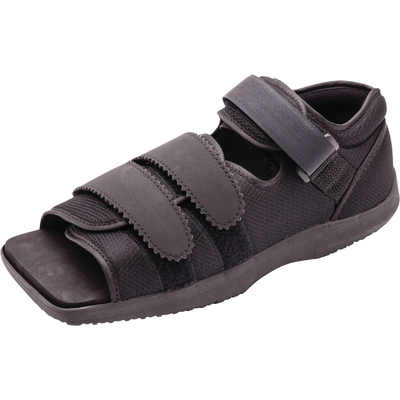
A flat, stiff-soled shoe for toe and forefoot injuries or surgery.
No, a cam boot and a walking boot are the same thing. "Cam" stands for controlled ankle motion, which describes what the boot does. You may also hear it called a fracture boot, a moon boot or a walker.
The real differences are between boot styles, not names. Height, air cells, shell type and sole shape change how much support you get. When comparing boots, look at those features instead of the label.
A tall walking boot reaches just below the knee. The longer struts give more leverage, so it holds the ankle and lower leg more firmly. Doctors often choose a tall boot for ankle fractures, severe sprains and Achilles injuries.
A short walking boot ends lower on the leg. It is lighter and easier to move in, and it works well for many foot and toe fractures. If your doctor names a height, follow it, because the wrong height can leave the injury under-supported.
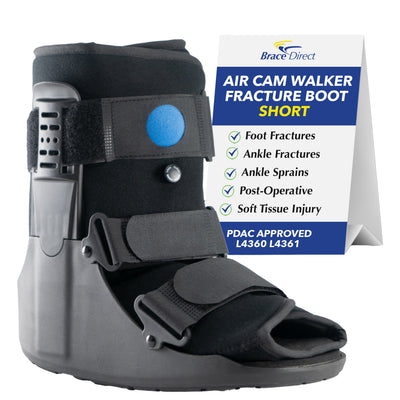
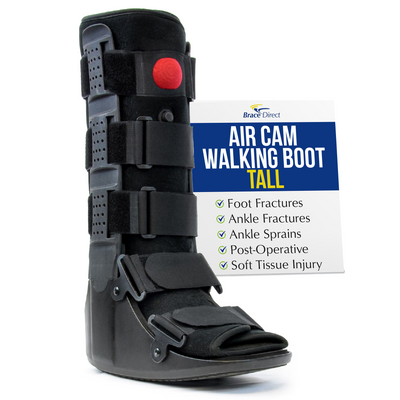
A pneumatic walking boot, often called an air walker boot, has air cells inside the liner. You pump them up to fill gaps around the ankle and let air out as swelling goes down. Many people find the snug fit more comfortable, especially in the first weeks.
A non-pneumatic boot relies on foam padding and straps. It is simple, has no pump to manage and usually costs less. It is a good choice when swelling is mild or when your doctor just wants the ankle held steady.
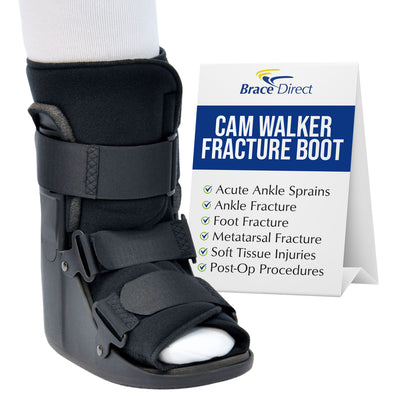
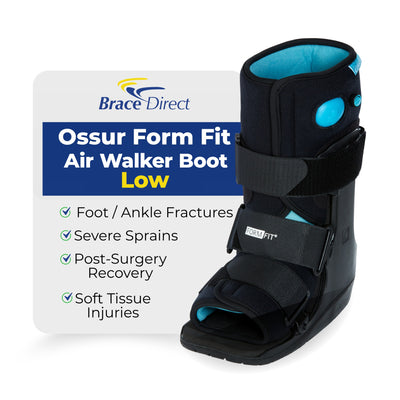
Do you need a boot for a broken foot? Often, yes. AAOS OrthoInfo explains that most metatarsal fractures are treated with limited weightbearing at first, then gradual weightbearing in a cast or walking boot. They usually heal enough for weightbearing in 6 to 8 weeks.
A broken ankle that stays in line can often be treated in a boot instead of surgery. Most ankle fractures take at least 6 weeks for early healing and 10 to 12 weeks for complete healing. For a Grade 2 sprain, AAOS notes that a walking boot or aircast brace can provide support.
Do you need a special shoe for a broken toe? Many broken toes heal with buddy taping and a wider shoe. A post-op shoe with a stiff sole is a common next step when the toe hurts with each step. Ask your doctor whether you need a boot, a post-op shoe or just roomy footwear.

A post-op shoe is a flat, open shoe with a stiff sole and adjustable straps. It protects the toes and forefoot and leaves room for bandages. It is lighter and lower than a boot, so it is easier to wear around the house.
A walking boot gives more support because it also holds the ankle. Choose a boot for ankle injuries, midfoot fractures and anything your doctor wants held firmly. A post-op shoe is often enough after bunion, hammer toe or other forefoot surgery, and for many broken toes.

Achilles injuries are one of the main reasons doctors choose a tall boot. For severe Achilles tendinitis pain, AAOS OrthoInfo says a doctor may recommend a walking boot for a short time. After surgery for Achilles tendinitis, most patients can walk in a removable boot or cast within 2 weeks.
For a torn Achilles, doctors often place heel wedges inside the boot to point the toes slightly down. This keeps the tendon ends closer together. Your care team removes the wedges one at a time as the tendon heals, so follow their schedule exactly.
A boot that is too tight around the calf can rub, cut off blood flow and make swelling worse. If you have a wide calf, look for a boot with long, adjustable straps and a liner that wraps rather than pinches. Air boots can also help, because you can let air out where the fit is tight.
Short boots are often easier for a larger calf because the top ends lower on the leg. Check the size chart on each product page, since boot sizes and strap lengths differ by manufacturer. If you are unsure, our team can help you compare options before you order.
A walking boot is safe for most people, but it changes how you walk. The boot sole is thicker than a normal shoe, so one leg sits higher than the other. Over days or weeks, that height difference can strain the hip, knee or lower back.
Other common problems are rubbing, stiffness and calf weakness from wearing the boot for a long time. Most of these are easy to prevent with a few habits.
Stand tall and take shorter steps than usual. Land on the middle of the boot and let the rocker sole roll you forward, instead of striking hard on the heel. Use crutches or a cane on the opposite side if your doctor tells you to limit weight.
Go slowly on stairs, ramps and wet floors, and keep a light on at night. Rest with the boot raised when your foot starts to ache or swell.
The liner and insole inside a walking boot take a lot of wear. Replace them when the padding flattens, the fabric tears, or the insole no longer sits flat. A worn liner can rub and let the foot slide inside the boot.
Many liners can be hand washed and air dried, but check the care label first. Replacement liners and insoles are made for specific boot models, so they don't fit every boot. Match the replacement to your boot's brand and size before you order. A sock liner worn under the boot liner adds a soft, washable layer and helps keep the liner clean.


Sit down, slide your heel all the way back, then close the straps from the toes up.
You should fit one finger under each strap. Tingling or color change means it is too tight.
Add weight only as fast as your doctor allows, even if the boot feels steady.
Some injuries need the boot at night. Ask your doctor whether yours does.
Most walking boots and post-op shoes have an HCPCS code, the billing code Medicare and insurers use for medical equipment. We don't bill insurance, but you can submit your receipt to your insurer for possible reimbursement. Most of our braces are also HSA and FSA eligible.

US-based team, Monday to Friday
Not sure which walking boot fits your injury? Tell us what your doctor diagnosed, which foot is hurt and what shoe size you wear. Our specialists can help you choose a size and style before you buy, and after your brace arrives you can use our fitting videos or book a virtual fitting session.
Unused items in their original packaging can be returned or exchanged within 30 days of purchase. See our Return Policy for details.
Contact Our TeamThere is no difference. "Cam" stands for controlled ankle motion, and it is another name for a walking boot. Compare boots by height, air cells and shell type instead.
It depends on where the injury is. Tall boots are used for ankle, Achilles and lower leg injuries, and short boots for many foot and toe injuries. Follow your doctor's order if they name a height.
Suggested: Brace Direct Air Cam Fracture Boot Tall or Brace Direct Air Walker Cam Fracture Boot Short
The most common are hip, knee or back strain from uneven leg height, plus rubbing and calf stiffness. A thicker shoe on the other foot and a long sock help. Call your doctor about calf pain or swelling that gets worse.
Most people wear the boot whenever they are up and walking. Your doctor will tell you when you can take it off to rest, bathe or sleep. Follow their plan rather than a set number of hours.
Some injuries need the boot at night, especially early on or after surgery. Others don't. Ask your doctor, and loosen the straps a little if you do sleep in it.
Each product page has its own size chart, because sizing differs by boot and manufacturer. If you are between sizes or unsure, our team can help you choose before you order.
Not always, but many people find an air boot more comfortable. The air cells let you adjust the fit as swelling changes. A non-air boot is simpler and often costs less.
Suggested: Ossur Form Fit Air Walker Boot Short
It depends on the injury. Most ankle fractures need at least 6 weeks for early healing, and metatarsal fractures often heal enough for weightbearing in 6 to 8 weeks. Your doctor decides when you can stop.