
U.S-Based Expert Support
M–F 9a–5p EST
M–F 9a–5p EST
The best brace for compression fracture recovery is usually a TLSO, the thoracic spine brace for compression fracture care that reaches from the hips to the shoulder blades and limits forward bending while the bone heals. For a lumbar compression fracture, a back injury or recovery after spinal surgery, a rigid LSO or the brace your surgeon chooses gives compression fracture back support where you need it, and a soft TLSO works as a gentle back brace for osteoporosis.

A firm brace limits the forward bending that loads a fractured vertebra.
Steady support makes standing, walking and getting out of bed easier.
A tall back panel and shoulder straps help hold your upper back upright.
A compression fracture is a break in one of the bones of the spine, called vertebrae. AAOS OrthoInfo explains that the front of the weakened bone cracks and becomes shorter, losing its original height, so the vertebra takes on a wedge shape. These fractures happen about 1.5 million times every year in the US.
Compression fractures often happen in the middle of the back (the thoracic spine) or where it meets the lower back. One fracture may cause sudden pain. Several over time can cause a loss of height and a rounded upper back.

Osteoporosis is the most common reason. The National Institute of Arthritis and Musculoskeletal and Skin Diseases describes it as a bone disease that develops when bone density and bone mass decrease, and lists severe back pain and loss of height as signs of a spine fracture.
Weak, thin bones can crack under everyday loads. Risk rises with age and is highest in older women.
A fall, car accident or hard landing can fracture a vertebra, even in strong bones.
With osteoporosis, AAOS notes a fracture can happen while reaching, twisting, coughing or sneezing, with no fall at all.
See a doctor right away for sudden back pain after a fall, or new back pain if you have osteoporosis. Get emergency care for numbness, weakness or trouble with your bladder or bowels. A brace supports your spine; it doesn't treat the cause.
A back brace helps people whose spine needs protection while it heals or settles. These are the people we hear from most often.
A brace eases pain and limits bending while a fracture heals.
Support makes moving around the house easier in the first weeks.
A soft brace gives gentle support to a rounded upper back.
Some doctors suggest a brace for comfort during recovery.
A rigid brace protects the spine while the bones grow together.
A firm brace steadies the spine after a sprain, fracture or instability.
Does a back brace help a compression fracture heal? AAOS notes that sometimes patients wear a back brace to help the fracture heal. A brace holds the spine more upright and limits the bending that loads the front of the broken bone.
Firm panels keep you from folding forward, which puts weight on the front of the fractured vertebra.
Holding the spine steady can make standing, walking and getting out of bed less painful.
Shoulder straps and a tall back panel help you stand straighter while the bone settles.
The right brace depends on where the fracture is. A TLSO reaches from the hips to the shoulder blades and supports fractures in the middle of the back. An LSO covers the lower back. Soft TLSOs give light support for older adults with osteoporosis and kyphosis.
A thoracic spine brace for a compression fracture needs to reach above the break, so it is usually a TLSO. Choose one with a tall back panel, shoulder straps you can adjust, and a front closure you can tighten without twisting. Your doctor will tell you how firm the brace should be.

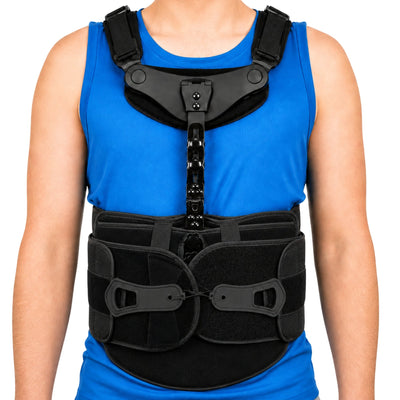
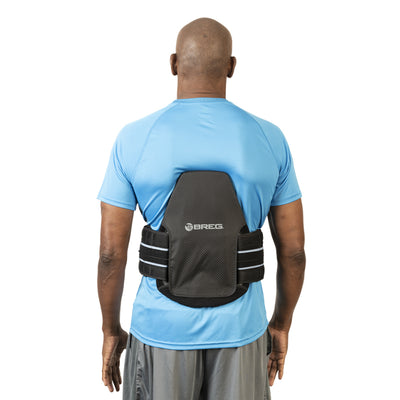
Braces for a lumbar compression fracture cover the lower back, from the base of the ribs to the hips. A firm LSO with a rigid back panel limits the bending that loads the fractured bone. If the fracture sits where the middle and lower back meet, your doctor may suggest a taller TLSO instead.


A TLSO brace for compression fracture care is common because many of these fractures happen in the middle of the back. An LSO stops at the waist, so it can't hold the thoracic spine. A TLSO reaches the shoulder blades and holds the spine more upright, which takes load off the front of the cracked vertebra.
What is the difference between a TLSO and an LSO for a compression fracture? The TLSO covers the middle and lower back, while the LSO covers only the lower back. Your fracture level decides which one you need.

Over time, small fractures can tip the upper back forward into kyphosis. Mayo Clinic lists compression fractures from weakened bones as a cause of kyphosis, and notes that too much curvature can lead to back pain and difficulty standing upright.
A back brace for osteoporosis should support without pressing hard on fragile bones. A soft TLSO gives gentle support you can wear for longer stretches. Ask your doctor before bracing, since some people need a firmer brace and others need none.
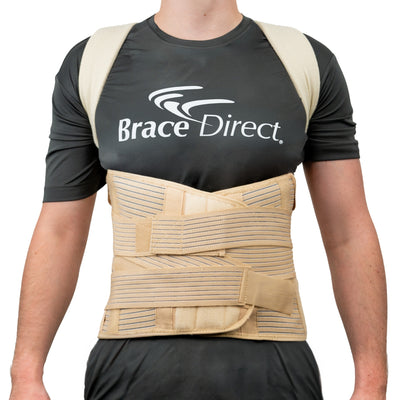

How long you wear a back brace for a compression fracture is up to your doctor, and it depends on the fracture and how it heals. AAOS notes that most people with a spinal compression fracture feel better within 3 months without surgery. Many people wear their brace less as pain eases.
Should you sleep in a back brace with a compression fracture? Most people take it off in bed, since lying down takes weight off the spine. Follow your doctor's advice, especially in the first weeks.

Bending to put on a brace can hurt after a fracture or surgery. These tips make it easier.
Kyphoplasty and vertebroplasty are procedures that inject bone cement into a fractured vertebra. In kyphoplasty, a small balloon first restores some of the bone's height. Some doctors suggest a brace for comfort afterward, while others don't, so ask your doctor before you buy one.
Not every back injury needs a brace. A pulled muscle usually does best with light activity, while a fracture or spinal instability may need a rigid brace to protect the spine. Spinal instability means the bones of the spine move more than they should, which can strain nerves and cause pain.
What is the difference between a rigid and a soft back brace? A rigid brace uses firm panels to limit motion and protect an injury. A soft brace supports and compresses but lets you move. Your doctor will tell you which you need and whether you can take it off to sleep or shower.


After spinal fusion, AAOS OrthoInfo notes your surgeon may suggest a brace to help protect the fusion while it heals. Physical therapy typically starts 6 weeks to 3 months after surgery, and it may be several months before the bone is solid.
What kind of back brace do you wear after spinal fusion? Usually a rigid LSO or TLSO, chosen by your surgeon. Can I buy a back brace before surgery? Yes, but confirm the type and size with your surgeon first. Is a back brace needed after a microdiscectomy? Many surgeons don't use one, so ask yours. Many people also use a cold therapy unit after surgery; check with your surgeon before you start.


Wear the brace exactly when your doctor or surgeon says, and ask before you stop.
Look for red marks under the panels and straps, especially if you have thin skin.
Short walks around the house help your recovery, unless your doctor says otherwise.
A brace doesn't treat osteoporosis. Ask your doctor about treatment to lower your risk of another fracture.
Most fracture and post-surgery back braces are coded as TLSOs or LSOs and have an HCPCS code, the billing code Medicare and insurers use for medical equipment. We don't bill insurance, but you can submit your receipt to your insurer for possible reimbursement. Most of our braces are also HSA and FSA eligible.

US-based team, Monday to Friday
Not sure which brace your fracture or surgery calls for? Tell us where the break is, what your doctor said and how easily you can bend. Our specialists can help you choose a size and style before you buy, and after your brace arrives you can use our fitting videos or book a virtual fitting session.
Unused items in their original packaging can be returned or exchanged within 30 days of purchase. See our Return Policy for details.
Contact Our TeamFor most fractures in the middle of the back, a TLSO that reaches the shoulder blades. For a lower back fracture, a rigid LSO. Your doctor will choose the type and firmness.
Suggested: Brace Align ComfortCore TLSO Back Brace or Brace Align Universal TLSO Back Brace
Sometimes patients wear a back brace to help the fracture heal. A brace limits bending and can ease pain, but rest, time and bone health treatment matter too.
It depends on the fracture and how it heals, so your doctor decides. Most people feel better within 3 months without surgery and wear the brace less as pain eases.
Most people take it off in bed, since lying down takes weight off the spine. Follow your doctor's advice, especially in the first weeks.
Yes. With weak bones, a fracture can happen while reaching, twisting, coughing or sneezing. New back pain with osteoporosis is a reason to see your doctor.
A TLSO reaches the shoulder blades and supports the middle and lower back. An LSO covers only the lower back, so it suits lumbar fractures.
Suggested: Aspen Horizon 456 TLSO or Brace Align Core Pro LSO Back Brace
Medicare and other insurers may help pay when a doctor orders the brace as medically necessary. We don't bill Medicare or insurance, but you can submit your receipt to your insurer for possible reimbursement.
It depends on the injury. A pulled muscle usually does best with light activity and short-term support, while a fracture or instability may need a rigid brace your doctor chooses.
Suggested: Brace Align VertebrAlign LSO Back Brace