
U.S-Based Expert Support
M–F 9a–5p EST
M–F 9a–5p EST
The best knee brace for fractured patella recovery is usually a knee immobilizer or a hinged knee brace locked in extension, which holds the leg straight while the bone knits. A broken kneecap, also called a patella fracture, and a tibial plateau fracture both start with your doctor's plan, and the brace follows that plan.

Holds the knee in a safe position so the broken pieces stay lined up.
A locked brace lets you stand and walk with crutches once your doctor clears weight.
A hinged ROM brace can unlock step by step as your knee is ready to bend.
A knee fracture turns simple things, like getting off the couch, into a plan. The right knee brace for a knee fracture keeps the bone protected and makes that plan easier to follow at home.
This guide covers the main types of knee fractures, what recovery looks like, and how to choose between a knee immobilizer and a hinged brace.
A knee fracture is a break in one of the bones that form the knee joint. That can be the kneecap (patella), the top of the shinbone (tibia) or the lower end of the thighbone (femur). Each one is treated a little differently, so the right brace depends on which bone is broken and how.
AAOS OrthoInfo sorts kneecap fractures into stable, displaced, comminuted and open types. A stable fracture stays lined up, while a displaced fracture has pieces that have moved apart. That difference decides whether you can heal in a brace or need surgery first.

Most knee fractures come from a sudden, strong force. The kneecap sits right at the front of the knee with little padding, so it takes the full impact of a fall or a hard hit.
Landing hard on a bent knee is one of the most common ways to break a kneecap.
A car crash where the knee hits the dashboard, or a hard hit in sports, can break the kneecap or shinbone.
Bones that have thinned with age can break from a smaller fall or a simple twist.
Go to an emergency room right away if your foot turns pale or cool, or feels numb, after a knee injury. AAOS OrthoInfo lists these as warning signs with breaks near the knee. A brace protects the bone; it doesn't replace an X-ray and a doctor's plan.
Nearly everyone with a knee fracture wears some kind of brace, cast or splint for a while. These are the people we help most often.
An immobilizer or locked brace keeps the knee straight while the bone knits.
A hinged brace protects the repair and lets your surgeon unlock motion step by step.
A hinged brace controls bending while you keep weight off the leg.
A light, easy-to-adjust immobilizer is simpler to put on and take off at home.
A hinged ROM brace bridges the gap between a cast and normal walking.
A broken bone needs to stay still and lined up while it knits back together. A knee fracture brace holds the joint in a safe position and controls how far it can bend.
Keeps the kneecap and its tendon from pulling the broken pieces apart.
Hinged braces have stops your doctor sets, so the knee bends only as far as is safe.
Lets you stand and walk with crutches once your doctor allows weight on the leg.
Knee fracture braces fall into two main groups: immobilizers that keep the leg straight, and hinged braces that can lock straight and later allow motion.
Three foam panels wrap the leg from thigh to calf. Firm, simple and quick to adjust.
One wraparound panel with stays. Lighter and lower profile for smaller legs.
Long uprights with dials that lock the knee straight or set a bending range.
Light support for swelling late in recovery, only once your doctor says the bone is healed.
A broken kneecap usually causes pain and swelling at the front of the knee, and many people can't straighten the leg. According to AAOS OrthoInfo, most kneecap fractures hurt moderately for a few days to a couple of weeks.
Healing takes longer than the pain. AAOS notes that most people return to normal activities within 3 to 6 months, and more severe fractures can take longer. Your strength and range of motion come back gradually with physical therapy.
Usually, yes. If the pieces of bone are still lined up, your doctor may treat it without surgery in a cast, splint or brace that keeps the knee straight. AAOS OrthoInfo notes that the knee generally needs to stay straight for 2 to 4 weeks.
If the pieces have moved apart, you will most likely need surgery first. After surgery, a brace protects the repair while you start moving the knee again. Either way, your surgeon decides the type of brace and how long you wear it.
A knee immobilizer is a long foam brace with stiff stays that holds your leg straight. It is often the first brace after a broken kneecap, either instead of a cast or right after surgery. Hook and loop straps make it easy to loosen for swelling and to remove when your doctor allows.
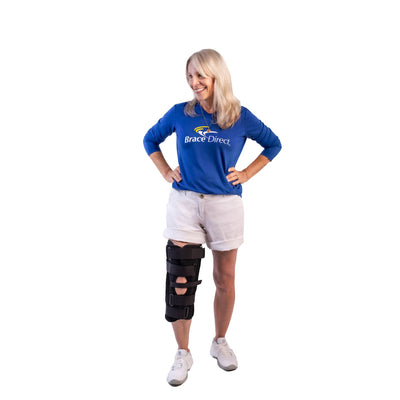
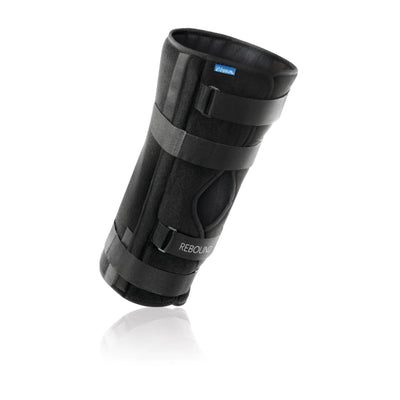
A hinged knee brace locked in extension does the same job as an immobilizer, but with more control. Dials on each hinge lock the knee fully straight. AAOS OrthoInfo notes that in most cases you can put full weight on the leg in a knee immobilizer or brace locked in extension.
The advantage comes later. When your doctor wants you to start bending, the same brace can unlock to a small range, then a bigger one. That saves you from buying a second brace partway through recovery.
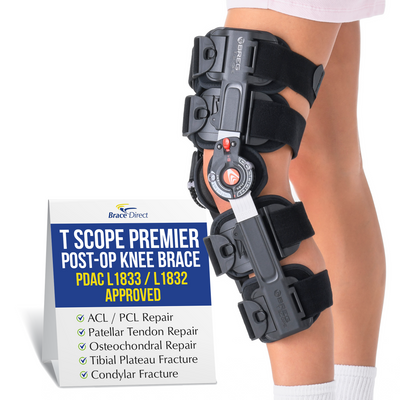
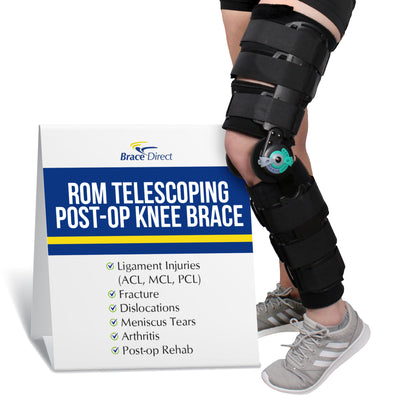
A tibial plateau fracture breaks the top of the shinbone, right at the knee joint. AAOS OrthoInfo notes that nonsurgical care may include casting and bracing, along with limits on motion and weight. Many fractures that enter the joint need surgery with plates and screws.
A tibial plateau fracture brace is usually a long hinged ROM brace. It protects the leg while you keep weight off it, and lets your doctor allow gentle bending early. Full weight-bearing may take 3 months or more of healing, so a comfortable, adjustable brace matters.

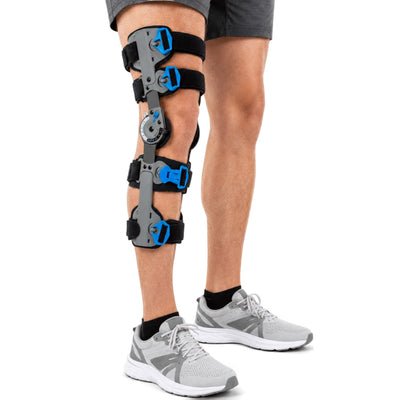

When you can walk depends on the fracture and your doctor's plan. In most cases you can put full weight on the leg in a locked brace. With some fractures, weight is not allowed for 6 to 8 weeks, according to AAOS OrthoInfo.
Many people start in an immobilizer and move to a hinged ROM brace once the bone is stable. The ROM brace lets your therapist add bending a little at a time, such as 0 to 30 degrees, then more as healing allows. Your doctor or therapist sets those numbers.
Ask before you change braces or unlock the hinges yourself. Bending too far too soon can pull the fracture apart, especially after a kneecap repair.
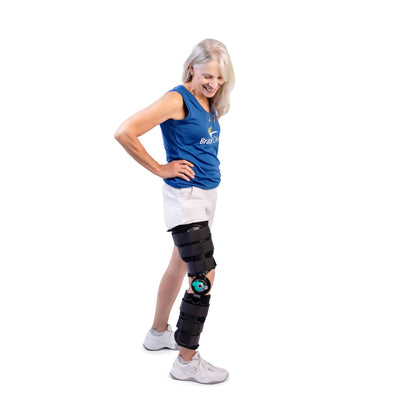

Swelling changes through the day. Re-adjust the straps so the brace is snug, not tight.
Look for red marks after each day. Marks that don't fade mean the fit needs adjusting.
Tape over the dials if you worry about bumping them.
Some people must sleep in the brace; others can remove it. Follow your surgeon's plan.
Knee immobilizers and hinged ROM braces often have an HCPCS code, the billing code Medicare and insurers use for medical equipment. We don't bill insurance, but you can submit your receipt to your insurer for possible reimbursement. Most of our braces are also HSA and FSA eligible.

US-based team, Monday to Friday
Not sure which knee fracture brace fits your recovery? Tell us which bone is broken, whether you had surgery and what your doctor said about bending. Our specialists can help you choose a size and style before you buy, and after your brace arrives you can use our fitting videos or book a virtual fitting session.
Unused items in their original packaging can be returned or exchanged within 30 days of purchase. See our Return Policy for details.
Contact Our TeamUsually, yes. A stable kneecap fracture is often treated in a cast, splint or brace that keeps the knee straight. After surgery, a brace protects the repair while you start to move the knee.
Suggested: Brace Direct Tri Panel Knee Immobilizer or Breg T Scope Premier Post-Op Knee Brace
It depends on the fracture and your surgeon. Many people keep the knee straight for the first few weeks, then move to a hinged brace that allows more bending. Your doctor decides when you can stop.
Sometimes. With some fractures you can bear weight in a brace locked straight, while others need weeks without weight. Use crutches until your doctor clears you.
Usually a long hinged ROM brace. It protects the knee while you keep weight off the leg and lets your doctor allow gentle bending when it's safe.
Suggested: Breg Recover Knee Brace or Ossur Rebound Post-Op Knee Brace
A knee immobilizer holds the leg straight and has no hinges. A hinged ROM brace can lock straight too, but it can also unlock to allow a set amount of bending later in recovery.
Suggested: Brace Direct Tri Panel Knee Immobilizer or Brace Direct Post Op ROM Hinged Telescoping Knee Brace
Ask your surgeon. Some people must keep it on at night to protect the repair, while others can take it off. Don't remove it until you know your plan.
Your surgeon decides, based on the fracture and any repair. Bending usually starts slowly in a hinged brace with the range set by your doctor or therapist.
Each product page has its own size chart, because sizing differs by brace. Many immobilizers come in lengths, and hinged braces often come in one size that adjusts.