
U.S-Based Expert Support
M–F 9a–5p EST
M–F 9a–5p EST
How long to wear a hip brace after surgery depends on your procedure, and your surgeon sets the plan as your hip heals. A hip abduction brace limits risky motions during that time, after a hip replacement, hip arthroscopy or a dislocation.

Hinge stops keep the hip out of deep bends while tissues heal.
A set range lets repaired tissue heal without extra strain.
Steady support helps you get up, walk and handle daily tasks.
The hip is a ball-and-socket joint, held together by a strong capsule, a cartilage rim called the labrum and the muscles around it. Common surgeries include hip replacement, hip arthroscopy to repair the labrum, and fracture repair. More than 450,000 total hip replacements are done in the US each year, according to AAOS OrthoInfo.
After surgery, the tissues around the joint need time to heal. AAOS notes that the risk of dislocation after hip replacement is greatest in the first few months. That's why surgeons give movement precautions, and some add a brace.
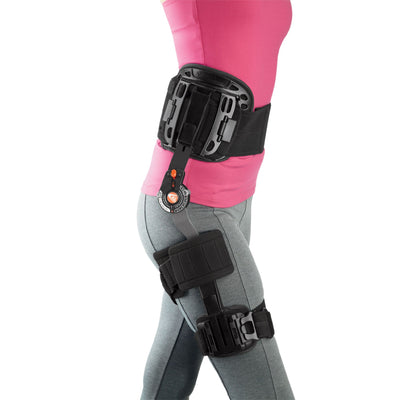
A hip abduction brace has a waist belt, a thigh cuff and an adjustable hinge at the side of the hip. The hinge limits how far you can bend the hip, and the frame holds the leg slightly out to the side. Doctors call that outward position abduction.
Hinge stops keep the hip out of deep bends while tissues heal.
The frame stops the leg from crossing your body.
Your care team can widen the range at follow-up visits.
Keep in mind: A brace adds protection, but it doesn't replace the precautions your surgeon gives you. Follow both.
The right support depends on your surgery and your age. Many people pair a brace with cold therapy in the first weeks.
An adjustable hinge limits bending and keeps the leg from crossing after surgery.
Holds the hip in a set position when your care team wants it still.
Holds a child's legs apart for hip dysplasia or after hip surgery.
Machines and wraps cool the hip to ease pain and swelling.
There's no single answer, so your surgeon sets the timeline. It depends on the surgery, the strength of the repair and how stable your hip feels. After hip replacement, AAOS OrthoInfo says movement precautions are usually needed for the first 6 weeks.
Many people after hip replacement don't need a brace at all. A brace after hip arthroscopy is more common, since it guards the repaired labrum. You can sit in most post-op hip braces within the hinge limits, and a raised toilet seat makes bathroom trips easier.

A hip dislocation happens when the ball pops out of the socket. It can follow a hard injury, or happen after a hip replacement before the tissues heal. Hip instability can feel like the joint is slipping, giving way or about to pop.
After the hip is put back in place, some surgeons use an abduction brace to keep the leg out of risky positions. AAOS OrthoInfo notes you may be asked to take special care when sitting, bending or sleeping. Your surgeon decides how long you wear a brace.
A hip immobilizer holds the hip in one position instead of allowing a set range. Your care team may use one when the hip needs to stay still, such as after some surgeries or to treat a stiff hip. In children, abduction splints hold the legs apart for hip dysplasia or after surgery.
A hip abduction pillow is different. It's a foam wedge that sits between your legs in bed to keep them apart. Some people use both, so ask your surgeon which you need.


Many surgeons recommend cold therapy after hip surgery to ease pain and swelling. An ice machine circulates cold water through a pad, so it stays cold longer than an ice pack. In one study in SICOT-J, patients used a cooling device for 72 hours after hip replacement. The authors said the results support its use for reducing swelling.
An ice pack wrap is simpler and costs less, but it warms up and needs refreezing. Always use a barrier between the pad and your skin, and follow your surgeon's plan for how long to ice.


Leave the hinge where your care team set it, and ask before any change.
Soft, thin clothing under the belt and cuff helps prevent rubbing.
A raised toilet seat and grab bars make each trip safer.
Chairs with arms help you stand up without bending the hip too far.
Most post-op hip braces have an HCPCS code, the billing code Medicare and insurers use for medical equipment. We don't bill insurance, but you can submit your receipt to your insurer for possible reimbursement. Most of our braces are also HSA and FSA eligible.

US-based team, Monday to Friday
Not sure which hip brace your surgeon wants? Tell us your surgery, which side, and any brace or hinge settings your doctor gave you. Our specialists can help you choose a size and style before you buy, and after your brace arrives you can use our fitting videos or book a virtual fitting session.
Unused items in their original packaging can be returned or exchanged within 30 days of purchase. See our Return Policy for details.
Contact Our TeamNot always. Many people after hip replacement don't need one, while a brace after hip arthroscopy or a dislocation is more common. Your surgeon decides based on your surgery and how stable the hip is.
Suggested: Breg Post Op T Scope Hip Brace
It varies by surgeon and by repair, so follow your surgeon's timeline. Most plans adjust the hinge, then stop the brace once the hip is strong and stable enough.
Yes, if your surgeon wants it on at night. A pillow between your knees and sleeping on your back can make it more comfortable. Ask before you take it off to sleep.
Most post-op hip braces let you sit within the hinge limits. A raised toilet seat and grab bars help, since you won't need to bend the hip as far. Ask your surgeon before loosening the brace.
Follow your surgeon's precautions when sitting, bending and sleeping, especially in the first months. Avoid crossing your legs and deep bending. If your surgeon prescribes a brace, it adds a layer of protection.
Suggested: Breg Post Op T Scope Hip Brace
For many people, yes. It stays cold longer than an ice pack and makes regular icing easier. One study also found results that support cold therapy for swelling after hip replacement.
Suggested: Brace Direct BlueIce Cold Cryotherapy Machine or Breg Polar Care Cube Cold Therapy System