
U.S-Based Expert Support
M–F 9a–5p EST
M–F 9a–5p EST
How long to wear an elbow brace after surgery depends on your procedure, and your surgeon sets the timeline as you heal. During elbow surgery recovery, a hinged ROM brace protects the joint, and the same type of brace helps after many fractures and dislocations.

Hinge stops guard healing tissue from motions that could strain it.
Controlled motion lets you start the gentle movement your surgeon allows.
Settings open in stages, so motion returns as the elbow heals.
The elbow is a hinge joint where three bones meet: the upper arm bone and the two forearm bones. Strong ligaments hold it steady, and tendons let you bend, straighten and turn your palm. Surgery may repair a fracture, a torn ligament or tendon, or clear out bone spurs.
Recovery is a balance. As AAOS OrthoInfo puts it, the goal is to protect the healing elbow while also limiting scar tissue and stiffness. That's why most surgeons pair a protective brace with early, controlled motion.
A ROM elbow brace, short for range of motion, has a hinge beside the elbow with two dials. One dial limits how far you can straighten the arm, and the other limits how far you can bend it. Your care team sets them, then opens the range as healing allows.
Stops the elbow before it reaches angles that could strain the repair.
Holds the elbow at one angle when your surgeon wants it still.
Lets motion return gradually, which helps fight stiffness.
Keep in mind: A brace protects the elbow while it heals; it doesn't speed up healing on its own. Your exercises and follow-up visits matter just as much.
The right brace depends on your surgery or injury and where you are in recovery. Many people use more than one type as they heal.
Adjustable dials control bending and straightening after surgery, fractures and dislocations.
Holds the elbow still at one angle when rest comes first.
Hinge stops block over-straightening for sprains and hyperextension.
Holds a gentle, steady stretch for an elbow that won't straighten.
Light support and warmth for mild sprains and later recovery.
There's no single answer. Your surgeon bases the timeline on the procedure, the strength of the repair and how you heal. Many plans start with the hinge locked or tightly limited, then open the range in steps at follow-up visits.
Right after some surgeries, an elbow immobilizer or splint holds the joint still for a short time. Once gentle motion is allowed, a hinged brace takes over. Pediatric hinged elbow braces come in smaller sizes for children after surgery or a fracture.


It depends on the break. Radial head fractures, a common break near the top of the forearm, make up about 20% of acute elbow injuries, according to AAOS OrthoInfo. For many of these, a sling or splint isn't needed beyond the first few days, and gentle motion starts early. Other breaks need a cast, surgery or a hinged brace.
A simple dislocation has ligament damage but no major broken bone. AAOS OrthoInfo says these are often kept still in a splint or sling for 1 to 3 weeks, then moved with range of motion exercises. After surgery for a complex dislocation, the elbow may be protected with a hinge on the outside of the arm.
A sprained elbow means the ligaments are stretched or torn. It often happens when the arm bends too far backward, called hyperextension, during a fall or a sport. Pain, swelling, bruising and a loose feeling are common signs.
For a mild sprain, a compression sleeve gives support and warmth while you heal. If the elbow feels loose, or you're heading back to sports, a stabilizer with hinge stops keeps the arm from bending too far back. Get checked first if you can't move the elbow, since a sprain and a fracture can feel alike.
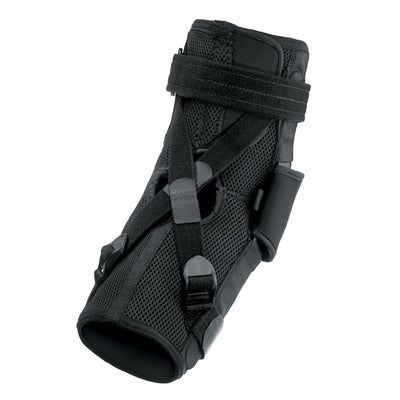
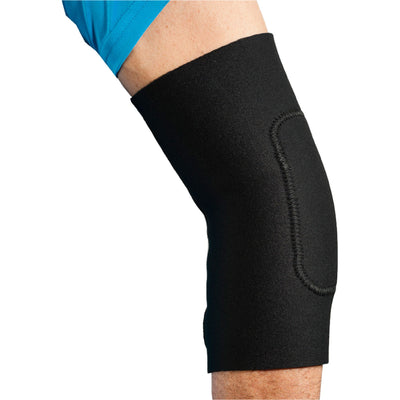
A stiff elbow that won't straighten is called an elbow contracture. It often follows a fracture, dislocation, surgery or a long time in a cast. AAOS OrthoInfo notes that some loss of motion is expected after an elbow dislocation, even with therapy.
Contracture splints hold the elbow at a gentle stretch for set periods each day. Some are static, holding one angle. Others are bend-to-fit or adjustable, so your therapist can increase the stretch over time.


Leave the dials where your care team set them, and ask before any change.
Wear a thin sleeve or shirt under the brace and check for red marks every day.
Rest the arm on a pillow so the elbow stays level and the brace doesn't pull.
Only take the brace off to shower if your surgeon says it's safe.
Most hinged and post-op elbow braces have an HCPCS code, the billing code Medicare and insurers use for medical equipment. We don't bill insurance, but you can submit your receipt to your insurer for possible reimbursement. Most of our braces are also HSA and FSA eligible.

US-based team, Monday to Friday
Not sure which elbow brace your surgeon wants? Tell us your surgery or injury, which arm, and any brace settings your doctor gave you. Our specialists can help you choose a size and style before you buy, and after your brace arrives you can use our fitting videos or book a virtual fitting session.
Unused items in their original packaging can be returned or exchanged within 30 days of purchase. See our Return Policy for details.
Contact Our TeamIt depends on the surgery and how you heal, so your surgeon sets the timeline. Many plans start with limited motion and open the hinge in steps at follow-up visits.
Keep the brace on if your surgeon says to, and rest your arm on a pillow so the elbow stays level. Sleeping on your back or your other side keeps pressure off the surgical arm.
Only when your surgeon or therapist says so. They open the range in stages based on your healing. Changing the dials early can strain the repair.
Many hinged elbow braces have an HCPCS code, so insurers may cover part of the cost. We don't bill insurance, but you can submit your receipt to your insurer for possible reimbursement.
Often, yes. A compression sleeve suits a mild sprain, while a hinged stabilizer suits an elbow that feels loose or a return to sports. See a doctor first if you can't move the elbow.
Suggested: Breg Padded Elbow Sleeve or Breg HEX Elbow Brace
It depends on the break. Some need a cast or surgery, while many radial head fractures need only a few days in a sling before gentle motion. A hinged brace protects the elbow once your doctor allows movement.