
U.S-Based Expert Support
M–F 9a–5p EST
M–F 9a–5p EST
How long to wear a knee brace after surgery depends on what was repaired: many people wear a hinged ROM brace or knee immobilizer for several weeks, and your surgeon decides when to unlock it and when to stop. Here is what to expect with a knee brace after knee surgery, from ACL and meniscus repair to knee replacement.

Keeps the knee from bending or twisting in ways that strain new stitches or grafts.
ROM dials let your surgeon add motion a little at a time.
A locked brace steadies the knee while you walk with crutches or a walker.
Coming home after knee surgery is easier when you know what each piece of gear is for. A knee brace after surgery protects the work your surgeon did, while ice and the right walking aids keep you comfortable and safe.
This guide covers post op knee braces, ROM settings, knee immobilizers, sleeping, ice machines and braces for a stiff knee.
It depends on the surgery. Operations that repair a ligament, tendon or the meniscus usually need a brace, because the repair must be protected while it knits. Operations that remove or replace tissue, such as a meniscus trim or a knee replacement, often need little or no bracing.
After an ACL reconstruction, for example, Mayo Clinic notes that you may wear a brace to stabilize the knee and use crutches for a while. Your surgeon decides the type of brace, how far it may bend and how long you wear it.
Bracing depends on what the surgeon fixed and how much stress it can take early on.
A hinged ROM brace often protects the graft and controls bending in the first weeks.
A brace may lock straight for walking, then unlock to a set range as healing allows.
Many people need little bracing and focus on early motion and walking aids instead.
Call your surgeon right away about new or growing calf, ankle or foot swelling, or a fever above 100°F that does not go away. AAOS OrthoInfo lists these as warning signs after knee replacement. A brace protects the knee; it doesn't replace your follow-up visits.
A knee brace after surgery helps anyone whose surgeon wants the knee protected or its motion limited. These are the people we help most often.
A post-op brace guards the new graft while you rebuild strength.
A ROM brace limits deep bending that could stress the stitches.
A locked brace protects plates, screws or a kneecap repair.
A contracture brace adds a slow, steady stretch to help the knee straighten.
Pediatric ROM braces fit smaller legs.
The two main post op knee braces are hinged ROM braces and knee immobilizers. Both protect the knee, but they do it in different ways.
A knee immobilizer holds the leg straight with foam panels and stiff stays. It is simple, light and quick to put on. A hinged ROM brace has long uprights and dials at the knee, so it can lock straight or allow a set range of bending.
Keeps the knee from bending or twisting in ways that strain new stitches or grafts.
ROM dials let your surgeon add bending a little at a time.
A locked brace helps you walk with crutches or a walker more safely.
Post-surgery knee recovery often uses more than one device over time.
Long, adjustable brace that locks straight or allows a set range. The most common post-op choice.
Foam panels that keep the leg straight. Simple and budget friendly.
A brace that holds a steady stretch to help a stiff knee straighten.
A machine that circulates cold water through a pad on the knee.
A shorter rigid brace some people wear later for sports.
A ROM knee brace is a hinged brace with range of motion dials at the knee. Each dial has two stops: one sets how far the knee can straighten (extension) and one sets how far it can bend (flexion). "Locked in extension" means both stops are set so the knee stays straight.
Here is how to adjust a ROM knee brace once your surgeon or therapist gives you the numbers:
Never change the settings on your own. A brace that bends too far too soon can stress the repair.
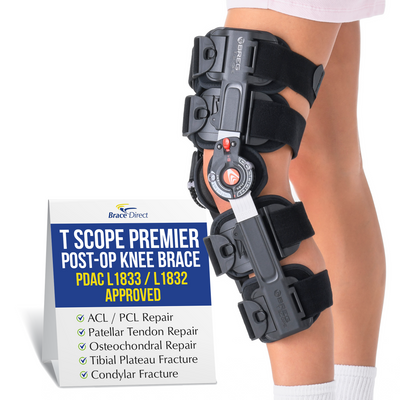
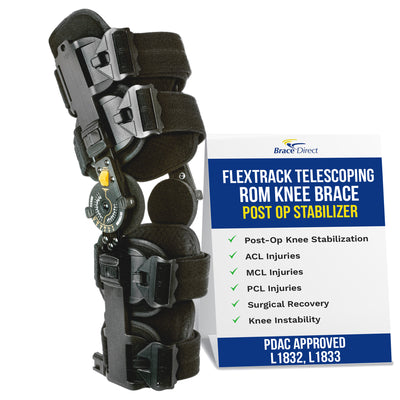
A knee brace after ACL surgery protects the new graft in the first weeks. Most people start in a hinged ROM brace, often locked straight for walking and opened up for therapy. Mayo Clinic notes that rehab focuses on early range of motion, strength and balance.
ACL recovery is long. Mayo Clinic says it can take a year or more before athletes can safely return to play. Some surgeons suggest a functional ACL brace for sports later on; others don't. Ask what your surgeon prefers.

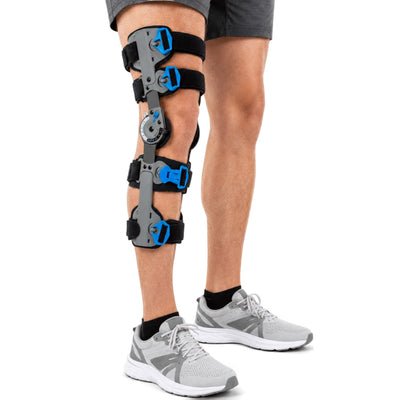
A meniscus trim and a meniscus repair recover very differently. AAOS OrthoInfo notes that a partial meniscectomy usually allows full weight right away and takes about 3 to 6 weeks to heal. A repair needs about 3 to 6 months of rehab.
After a repair, surgeons often use a hinged ROM brace that limits deep bending. After a trim, many people need little or no bracing. The ROM braces above work for both, since the hinges can be set to your surgeon's plan.
Most people don't need a hinged brace after a knee replacement. The focus is on early walking with a cane, crutches or a walker, and on getting your knee to bend and straighten. AAOS OrthoInfo says most people can resume daily activities within 3 to 6 weeks.
Some surgeons use a knee immobilizer for the first days, especially at night. Later, once your incision has healed and your surgeon agrees, a light compression sleeve can add warmth and support on longer walks.

A knee immobilizer should hold your leg straight without pressing on the incision. Here is how to wear a knee immobilizer so it stays in place:
If your immobilizer keeps slipping, tighten the thigh strap first. A thin sleeve or leggings under the brace can also help it grip.
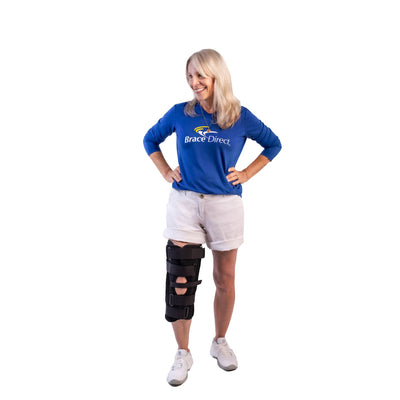
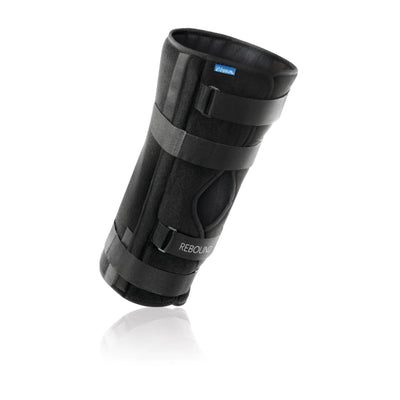
How long to wear a knee brace after surgery depends on what was repaired, how well it is healing and your surgeon's plan. Ligament and meniscus repairs usually need the longest protection. Many people move from a locked brace to an unlocked one, then to no brace or a sleeve.

Many surgeons want the brace on at night in the early weeks, so you don't bend or twist the knee in your sleep. Lie on your back with the leg straight and supported. Avoid a pillow under the bent knee, since a bent knee can stiffen.
If side sleeping is more comfortable, put a pillow between your knees and keep the brace on. Loosen the straps slightly at night if swelling makes them feel tight, but keep the hinges locked as set.

Cold helps with pain and swelling after surgery. An ice machine for knee after surgery use circulates cold water through a pad, so the cold stays steady for longer without you refilling bags.
It's a convenience, not a must. A 2023 review in Frontiers in Surgery of seven trials found no clear difference in pain between continuous cold machines and traditional ice after knee replacement. Many people still like a machine for steady cold through the night and fewer trips to the freezer.


A knee flexion contracture means the knee won't fully straighten. It can happen after surgery, a long time in bed or with arthritis. Even a small bend left in the knee can make walking harder and more tiring.
A contracture brace holds the knee in a steady, gentle stretch toward straight for set periods each day. Some can be adjusted as the knee loosens. Your therapist will set how long you wear it and how far to stretch.
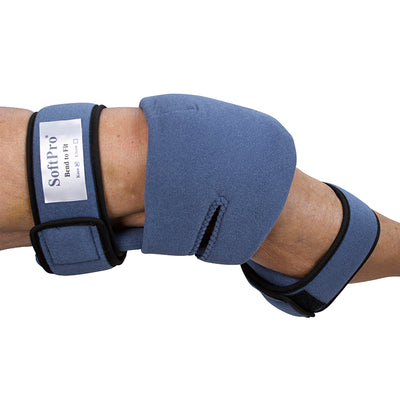
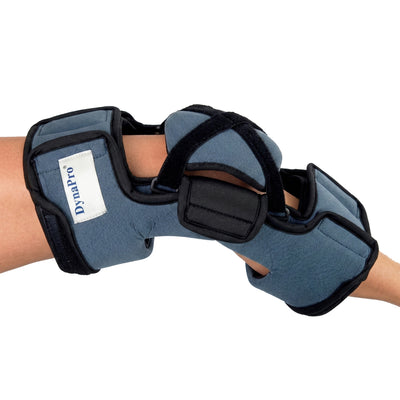
A little planning makes the first weeks at home easier. These knee surgery recovery must haves cover most needs:

The hinge centers should sit level with the middle of the kneecap on both sides.
Tighten the thigh straps first and re-check them after you walk.
Wear a thin sleeve or clothing under the brace, and keep the incision covered as directed.
Only change the hinge angles when your surgeon or therapist tells you to.
Most post op knee braces have an HCPCS code, the billing code Medicare and insurers use for medical equipment. We don't bill insurance, but you can submit your receipt to your insurer for possible reimbursement. Most of our braces are also HSA and FSA eligible.

US-based team, Monday to Friday
Not sure which post op knee brace your surgeon wants? Tell us your surgery, your date and any brace notes from your surgeon. Our specialists can help you choose a size and style before you buy, and after your brace arrives you can use our fitting videos or book a virtual fitting session.
Unused items in their original packaging can be returned or exchanged within 30 days of purchase. See our Return Policy for details.
Contact Our TeamIt depends on the surgery and your surgeon's plan. Ligament and meniscus repairs usually need the longest protection, while many knee replacements need little bracing. Don't stop until your surgeon says so.
Most people don't need a hinged brace after a knee replacement. Some surgeons use an immobilizer for the first days, and a light sleeve may help later once your surgeon agrees.
Many surgeons want the brace on at night in the early weeks to keep the knee from bending or twisting. Ask your surgeon when it is safe to sleep without it.
After a repair, usually a hinged ROM brace that limits bending. After a trim, many people need little or no brace.
Suggested: Breg T Scope Premier Post-Op Knee Brace or Brace Align FlexTrack ROM Telescoping Knee Brace
Tighten the thigh straps first, make sure the hinges sit at the middle of the knee, and re-check the fit after walking. A thin sleeve under the brace can help it grip.
Most post-op braces aren't made to get wet, and your incision may need to stay dry. Ask your surgeon whether you can remove the brace to shower and how to protect the knee.
A hinged knee brace with dials that set how far the knee can bend and straighten. It can lock straight or allow a set range, so it can be used through several stages of recovery.
Suggested: Breg T Scope Premier Post-Op Knee Brace
Not necessarily for pain. A 2023 review found no clear difference in pain between cold machines and traditional ice after knee replacement, but a machine keeps the cold steady with less effort.
Suggested: Brace Direct Digital FrozenHeat Therapy Unit