
U.S-Based Expert Support
M–F 9a–5p EST
M–F 9a–5p EST
The best neck traction device for home is one that gives a gentle, controlled stretch you can stop easily, such as a cervical air traction collar or a digital traction unit. A good cervical traction device can ease disc, nerve and muscle pain as part of a plan from your doctor or therapist.

A gentle stretch can take pressure off irritated nerve roots in the neck.
A steady pull helps sore muscles at the back of the neck let go.
Short sessions on your own schedule, without a trip to the clinic.
A neck traction device gently pulls the head away from the shoulders to stretch the neck. The stretch opens the spaces between the neck bones and eases the muscles around them. Physical therapists have used traction in the clinic for years, and home devices let you do a gentle version on your own schedule.
Traction is most often used for disc and nerve pain. StatPearls, a medical reference from the National Library of Medicine, explains that traction aims to relieve sustained pressure on the nerve roots, which can ease the symptoms of a pinched nerve. It is also used for tight muscles and stiffness from arthritis.
Neck traction devices can ease pain for some people, but the research is mixed. A 2020 review in the Journal of Clinical Medicine of seven studies found that adding traction to other treatments lowered pain in people with a pinched nerve, though the authors said the effect was small and the evidence low in quality. Traction works best as one part of a plan that includes exercise and good posture.
A gentle lift makes a little more room between the bones and around the nerve roots.
A steady stretch helps the muscles at the back of the neck let go.
Many people use a short session to ease soreness at the end of the day.
Talk with your doctor before you start. AAOS OrthoInfo lists traction as one possible part of physical therapy for a pinched nerve, alongside exercise and other care.
Home neck traction devices come in three main styles. They differ in how they create the stretch and how much control you have over it.
An inflatable collar you pump up to lift the head. Light and portable, and you can wear it sitting up.
A cradle you lie on that stretches the neck with a set force. Some add heat or TENS.
A lying-down unit with a hand pump and a gauge so you can set the pull precisely.
The best neck traction device for home use is one you'll actually use and can control easily. For most people, that means a cervical air traction collar for quick sessions sitting up, or a digital traction unit for longer sessions lying down. Both let you start gently and build up.
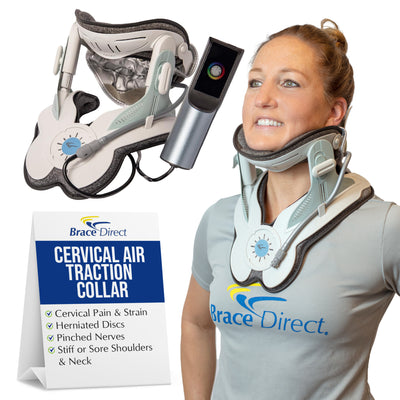

A cervical air traction collar wraps around your neck and lifts the head as it inflates. It is a good neck decompression device for gentle, short sessions, and you can use it sitting in a chair. A pneumatic traction unit has you lie down with your head in a cradle while a hand pump sets the pull, so you can control the force more precisely.
If your therapist has given you a target force, a pneumatic unit with a gauge makes it easier to match. If you want simple relief after work, an air collar is often enough. Neck stretchers that only bend the neck backward over a curve are not the same as traction devices.


Always follow the instructions that come with your device and the plan from your doctor or therapist. These general steps help most people start safely.
Traction isn't safe for everyone. StatPearls lists probable or relative contraindications that include tumors, spine infections, osteoporosis, ligament instability, and some blood vessel problems in the neck. Get your doctor's okay first if any of these apply to you, or if you've had neck surgery or a recent neck injury.

Begin with gentle sessions and build up only if your neck feels better afterward.
Use your device on a couch, bed or recliner where you can relax fully.
Note the setting and how you feel, so you and your therapist can adjust.
Traction eases pain; the exercises your therapist gives you build strength.
Each product page lists its own size and fit details, because devices differ by manufacturer.
Some home traction equipment has an HCPCS code, the billing code Medicare and insurers use, such as E0849 for certain cervical traction units. We don't bill insurance, but you can submit your receipt to your insurer for possible reimbursement. Most of our braces are also HSA and FSA eligible.

US-based team, Monday to Friday
Not sure which neck traction device fits you? Tell us what is causing your neck pain, whether you prefer to sit or lie down and what your therapist suggested. Our specialists can help you choose a size and style before you buy, and after your brace arrives you can use our fitting videos or book a virtual fitting session.
Unused items in their original packaging can be returned or exchanged within 30 days of purchase. See our Return Policy for details.
Contact Our TeamThey can ease pain for some people. A review of seven studies found a small pain benefit when traction was added to other care for a pinched nerve, so use it as one part of your plan.
Follow your device instructions and your therapist's plan. Most people start with short, gentle sessions and only build up if their neck feels better afterward.
People with spine tumors or infections, osteoporosis, an unstable neck or certain blood vessel problems should not use it without a doctor's okay. Ask your surgeon first if you've had neck surgery.
It may ease the pain. Traction aims to take pressure off the nerve roots, and physical therapists often use it for a pinched nerve alongside exercise.
Suggested: Aspen ComforTrac Cervical or Brace Direct Digital Cervical Traction Unit
Not quite. A neck stretcher usually bends the neck back over a curved support, while a traction device gently lifts the head to open the spaces between the bones.
Suggested: Brace Direct Cervical Air Traction Collar
We don't bill insurance or Medicare. Some traction units carry the E0849 code, so you can submit your receipt to your plan for possible reimbursement.