
U.S-Based Expert Support
M–F 9a–5p EST
M–F 9a–5p EST
The best knee brace for meniscus tear pain depends on the tear: a sleeve or meniscus stabilizer knee brace suits mild tears, while a hinged or unloader brace suits tears with instability or arthritis. A torn meniscus is a tear in the cartilage cushion inside your knee, and it is one of the most common knee injuries.

Support around the joint helps the knee feel less likely to give way.
Hinged braces limit the sideways and rotating motions that aggravate a tear.
The right brace keeps you walking, working and exercising while the knee settles.
Does a knee brace help a torn meniscus? For many people it does, by making walking, stairs and daily tasks more comfortable while the knee settles. The best knee brace for torn meniscus pain is the one that matches your tear and your day.
This guide explains what a meniscus tear is, how braces help, and which type to choose for a mild tear, a tear with arthritis, or recovery after surgery.
Each knee has two menisci, C-shaped pads of cartilage that sit between your thighbone and shinbone. Mayo Clinic describes the meniscus as tough, rubbery cartilage that acts as a shock absorber. One meniscus sits on the inner side of the knee (medial) and one on the outer side (lateral).
AAOS OrthoInfo calls meniscus tears among the most common knee injuries. Some tears happen suddenly during sports. Others develop slowly as the cartilage wears with age, and older adults are more likely to have this kind of tear.
Small tears in the outer edge of the meniscus have a better blood supply and a better chance to settle down. Tears in the inner part have less blood flow, so they are more likely to keep causing symptoms.

A torn meniscus can come from one hard twist or from years of wear. Mayo Clinic notes that any activity that forcefully twists or rotates the knee can cause one, and that kneeling, deep squatting or heavy lifting can sometimes be enough.
Sudden turns, cuts and landings in sports put the meniscus under high stress.
Older cartilage is weaker, so a tear can happen with little or no injury.
Kneeling, squatting low or lifting something heavy can catch the meniscus between the bones.
See a doctor if your knee locks and won't straighten, swells quickly, or gives way. A brace supports the knee; it doesn't repair the tear. Your doctor will tell you whether rest, physical therapy or surgery is right for you.
A knee brace for torn meniscus pain helps people who want to stay active while the knee settles. These are the people we help most often.
Compression and light support can make walking and stairs more comfortable.
An unloader brace can shift weight off the sore side of the knee.
A hinged brace adds side-to-side control for cutting and pivoting.
A hinged ROM brace protects a repair while you regain motion.
Bariatric hinged braces fit larger thighs and stay in place better than standard sizes.
A knee brace doesn't repair a torn meniscus, but it can help you move with less pain. It works by supporting the joint, limiting the motions that pinch the tear, and in some cases shifting load away from the injured side.
Most people start with simple care. AAOS OrthoInfo describes rest, ice, compression and elevation as the first steps, with crutches if needed. A brace fits into that plan by giving support when you are up and moving.
Compression and side support help the knee feel steadier during daily tasks.
Hinged braces resist the sideways and rotating motions that aggravate a tear.
Unloader braces move pressure toward the healthier side of the knee.
The right brace depends on how large the tear is, whether you have arthritis, and how active you are.
A pull-on sleeve for mild tears. Light support and warmth for daily wear.
A sleeve or wrap with side stays or hinges for more control.
Metal hinges on both sides for tears with instability or a return to sports.
A frame that shifts weight off one side of the knee, for tears with arthritis.
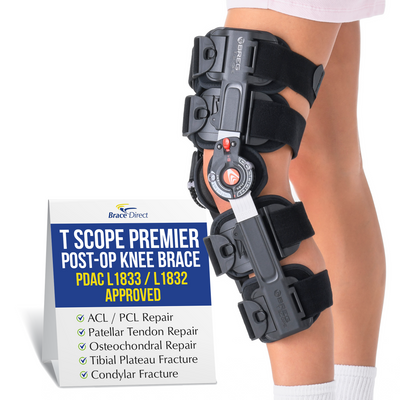
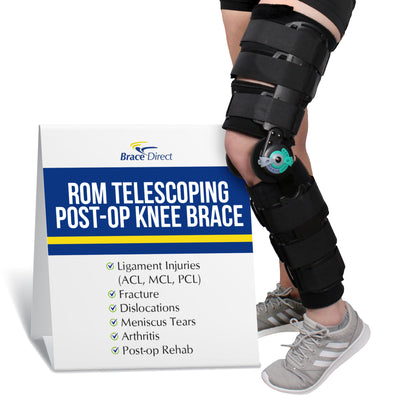
A long hinged brace that controls bending after meniscus repair surgery.
Meniscus tears and knee arthritis often show up together, especially after 50. Worn cartilage tears more easily, and Mayo Clinic notes that a torn meniscus can make osteoarthritis more likely in the injured knee.
The best knee brace for meniscus tear and arthritis is usually an unloader brace or a hinged sleeve. An unloader eases pressure on the worn side, while a hinged sleeve adds warmth and support for daily walking. If your pain sits on one side of the knee, start with an unloader.
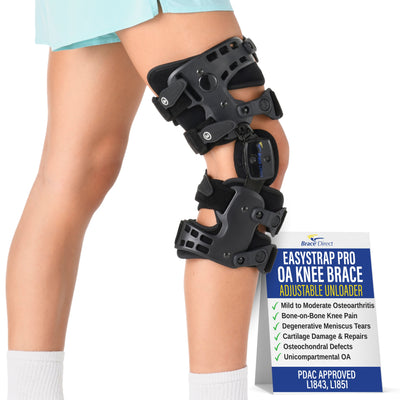
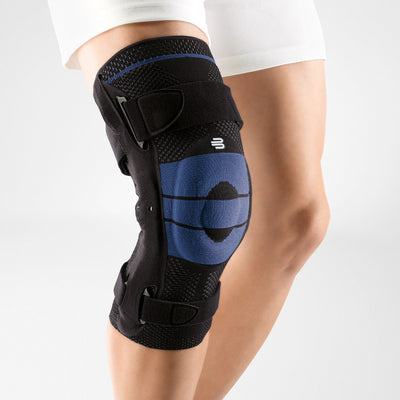
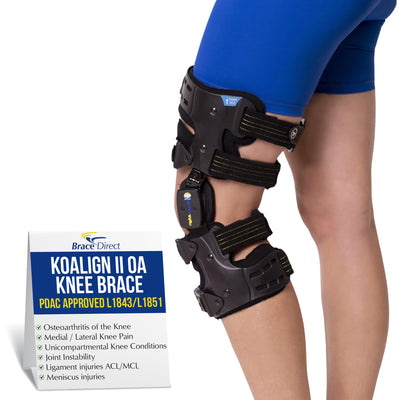
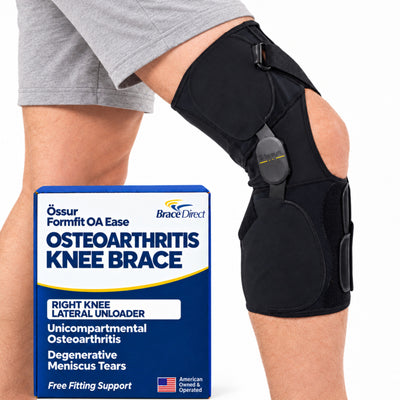
Many degenerative tears happen in the medial meniscus, on the inner side of the knee. That side also carries more of your weight with each step. An unloader knee brace for meniscus tear pain applies gentle pressure to shift some of that load to the outer side.
Unloaders work best when the pain sits on one side. They are usually adjustable, so you can increase the shift as you get used to the feel. Make sure you order the right side, since many unloaders are made for a medial or lateral knee.
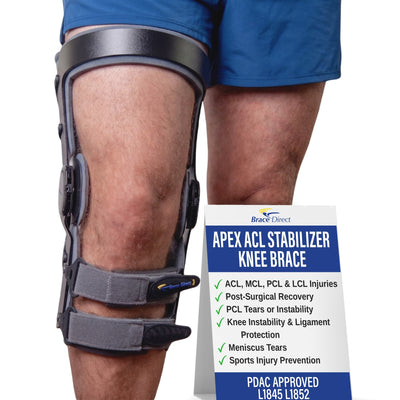
A hinged knee brace for meniscus tear support adds metal hinges on both sides of the knee. The hinges let you bend and straighten while blocking side-to-side wobble. That helps when your knee feels loose or you have a ligament injury along with the tear.
Choose a soft hinged sleeve for daily wear and light activity. Choose a rigid, double upright brace if you are returning to cutting or pivoting sports.


For a small or degenerative tear, a compression sleeve is often the easiest place to start. It is light, slips under pants, and gives steady support for walking, errands and stairs. Many people find the warmth and compression make the knee feel less stiff.
A meniscus stabilizer knee brace adds side stays or a soft hinge to that sleeve. Step up to one if the knee still feels unsteady in a plain sleeve.

How long to wear a knee brace for torn meniscus pain depends on the tear and your activity. Most people wear one while walking, working or exercising, and take it off to rest and sleep. As pain eases and strength returns, many people use it only for longer days or sports.
Recovery depends on the type of surgery. AAOS OrthoInfo notes that a partial meniscectomy, which trims the torn piece, takes about 3 to 6 weeks to heal. A meniscus repair, which stitches the tear, needs about 3 to 6 months of rehab.
After a repair, your surgeon may want you in a hinged ROM brace that limits how far the knee bends. After a trim, many people need little or no bracing. Follow your surgeon's plan for the brace settings and how long to wear it.
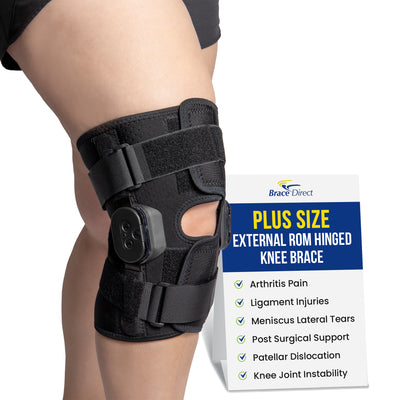
Standard braces often slide down or pinch on larger legs. A plus size hinged brace is cut wider at the thigh and calf, with longer straps that stay put. Look for adjustable hinges and wide, soft straps for comfort through the day.

Wear it for a few hours at first, then add time as it feels comfortable.
Hinges should sit at the center of the knee joint, level with the middle of the kneecap.
You should fit a finger under each strap. Tingling or numbness means loosen it.
On sore days, AAOS OrthoInfo suggests cold packs for 20 minutes at a time. Keep the leg raised when you rest.
Most hinged and unloader braces for a meniscus tear have an HCPCS code, the billing code Medicare and insurers use for medical equipment. We don't bill insurance, but you can submit your receipt to your insurer for possible reimbursement. Most of our braces are also HSA and FSA eligible.

US-based team, Monday to Friday
Not sure which meniscus brace fits you? Tell us where the knee hurts, whether you have arthritis or had surgery, and what you want to get back to. Our specialists can help you choose a size and style before you buy, and after your brace arrives you can use our fitting videos or book a virtual fitting session.
Unused items in their original packaging can be returned or exchanged within 30 days of purchase. See our Return Policy for details.
Contact Our TeamIt can help you move with less pain, but it doesn't repair the tear. A brace supports the knee, limits twisting and, with an unloader, shifts weight off the sore side.
Suggested: Brace Align EasyStrap Pro OA Knee Brace or Bauerfeind GenuTrain Knee Brace
It depends on the tear. A compression sleeve suits mild tears, a hinged brace suits tears with instability, and an unloader suits tears with arthritis on one side of the knee.
Suggested: Brace Align EasyStrap Pro OA Knee Brace or Brace Direct Neoprene Hinged Knee Brace
Most people wear it during the activities that cause pain and take it off to rest. After surgery, your surgeon sets how long you wear it.
A sleeve works for mild tears and everyday comfort. A hinged brace is better if the knee feels unstable or you are going back to sports.
Suggested: Brace Align Apex ACL Stabilizer Knee Brace or Bauerfeind GenuTrain Knee Brace
It may, especially when you also have arthritis on the inner side. The brace shifts some weight to the outer side of the knee.
Suggested: Brace Align KOAlign II OA Knee Brace
It depends on the surgery. After a repair, surgeons often use a hinged brace that limits bending. After a trim, many people need little or no bracing.
Suggested: Breg T Scope Premier Post-Op Knee Brace
An unloader brace is usually the first choice when pain sits on one side. A hinged compression sleeve is a good option if the pain is more general.
Suggested: Brace Align EasyStrap Pro OA Knee Brace or Bauerfeind GenuTrain S Pro Knee Brace
Many people can walk with a small tear, and a brace can make it more comfortable. If your knee locks, gives way or swells a lot, see your doctor before walking on it.