
U.S-Based Expert Support
M–F 9a–5p EST
M–F 9a–5p EST
The best hinged knee brace depends on why you need it: a soft double hinged knee brace suits arthritis and mild sprains, while a rigid hinged knee brace suits ligament injuries, sports and recovery after surgery. Hinges let the knee bend normally while blocking side-to-side wobble.

Hinges block the side-to-side wobble that makes a knee feel loose.
The hinge follows your knee's motion, so walking and stairs feel normal.
Firm support helps you move on uneven ground and during sports.
A hinged knee brace sits between a simple sleeve and a full post-op brace. Knowing which style you need saves money and gets you the right level of support the first time.
A hinged knee brace has a hinge on one or both sides of the knee, joined to uprights that run along the thigh and calf. The hinges let the knee bend and straighten in a normal arc while blocking side-to-side wobble. A double hinged knee brace has hinges on both sides, which gives the most even control.
Hinged braces come in soft and rigid styles. Soft styles build the hinges into a neoprene or knit sleeve or wrap. Rigid styles use a firm frame and straps, and many add dials that limit how far the knee can bend.
You need a hinged knee brace when the knee needs more control than a sleeve can give. The most common reasons are ligament injuries, an unstable knee, arthritis and recovery after surgery.
AAOS OrthoInfo notes that with a low-grade MCL injury you can keep moving while wearing a hinged knee brace for stability.
AAOS OrthoInfo describes support braces that help carry the knee load, and unloader braces that shift weight off the sore side.
With most kneecap fractures, AAOS OrthoInfo notes you can bear full weight in a brace locked in extension.
Hinged knee braces range from light sleeves to rigid frames.
A pull-on sleeve with hinges built in. Comfortable for daily wear and mild instability.
Opens flat and wraps around the knee. Easier to put on, especially with swelling.
A firm frame with double uprights for ligament injuries and sports.
A long hinged brace with dials that lock the knee or set a bending range.
Uses a spring in the hinge to assist motion. A less common design.
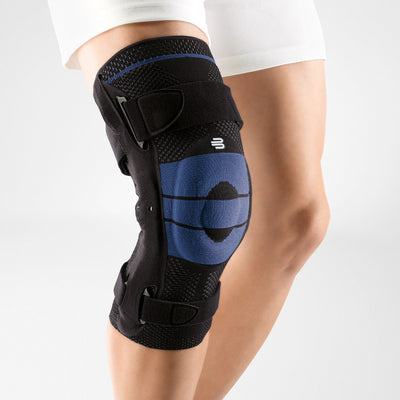
For everyday support, the best hinged knee brace is a soft double hinged sleeve or wrap. It fits under loose pants, steadies the knee on stairs and uneven ground, and is comfortable for hours. It suits mild sprains, a knee that feels loose, and a hinged knee brace for arthritis or a hinged knee brace for meniscus tear pain.


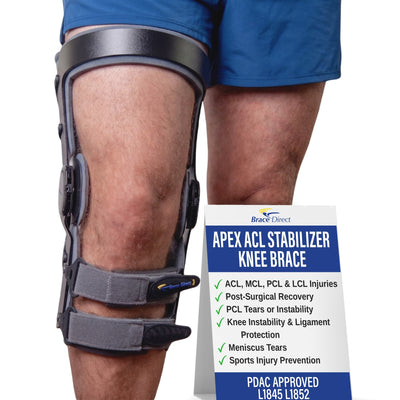
A rigid hinged knee brace uses a firm frame and double uprights. It is the choice for ACL tears, multiple ligament injuries and returning to cutting and pivoting sports. These braces give the most control but take a little longer to put on.

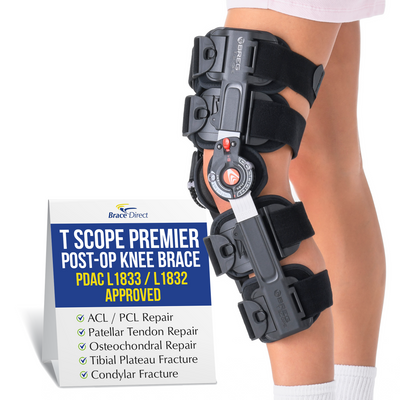
After ligament, meniscus or kneecap surgery, surgeons often use a long hinged ROM brace. Dials at the hinge lock the knee straight or allow a set range, which your surgeon adjusts as you heal.
A hinged knee brace keeps slipping most often because of size, strap order or hinge position. Hinges sitting below the joint pull the whole brace down as you walk.

This lines the brace up with the way your knee moves.
Place each hinge level with the middle of the kneecap on both sides.
Start with the straps closest to the knee, then the thigh and calf straps.
Walk a few steps, then re-tighten any strap that loosened.
Most hinged knee braces carry an HCPCS code, the billing code Medicare and insurers use for medical equipment. We don't bill insurance, but you can submit your receipt to your insurer for possible reimbursement. Most of our braces are also HSA and FSA eligible.

US-based team, Monday to Friday
Not sure which hinged knee brace fits you? Tell us why you need support, how active you are and whether you had surgery. Our specialists can help you choose a size and style before you buy, and after your brace arrives you can use our fitting videos or book a virtual fitting session.
Unused items in their original packaging can be returned or exchanged within 30 days of purchase. See our Return Policy for details.
Contact Our TeamIt depends on your need. A soft double hinged sleeve suits arthritis and mild sprains, while a rigid hinged brace suits ligament tears and sports.
Suggested: Brace Direct Neoprene Hinged Knee Brace or Brace Align Apex ACL Stabilizer Knee Brace
When your knee needs more control than a sleeve gives, such as with a ligament injury, an unstable knee, arthritis or recovery after surgery.
A sleeve gives compression and warmth. A hinged brace adds hinges and uprights that block side-to-side wobble while letting the knee bend.
Suggested: Bauerfeind GenuTrain S Pro Knee Brace
Sit with the knee slightly bent, center the hinges level with the middle of the kneecap, and fasten the straps closest to the knee first.
The brace may be too big, the hinges may sit below the joint, or the thigh straps may be loose. Check the size chart and re-center the hinges.
Many people wear a soft hinged brace through the day. Take breaks to let your skin breathe and check for red marks. Follow your doctor's plan after surgery.