
U.S-Based Expert Support
M–F 9a–5p EST
M–F 9a–5p EST
For most people, the best brace for foot drop is an ankle-foot orthosis, or AFO brace. This drop foot brace holds the front of your foot up, so your toes clear the ground when you walk and you're less likely to trip.

A foot drop brace lifts your toes as your leg swings forward, so they don't catch.
A review of 19 studies found AFOs improve walking speed and stride after stroke.
A steadier ankle and a lifted foot make curbs, stairs and rugs safer.
Foot drop, also called drop foot, means you can't lift the front of your foot the way you normally would. Doctors call that upward motion dorsiflexion, and Mayo Clinic notes that people with foot drop may need to wear a brace on the ankle and foot to hold the foot in position. When it's weak, your toes point down as your leg swings forward, so they drag or catch on the floor.
To make up for it, many people lift the knee higher than normal, swing the leg out to the side, or let the foot slap down with each step. These habits are tiring, and they make tripping and falling more likely, especially on stairs, curbs and uneven ground.
Foot drop can affect one foot or both. It can be short-term, such as after a nerve injury that heals, or long-term, such as after a stroke or with multiple sclerosis.
A foot drop brace is the most common way to manage it. The best one for you depends on why you have foot drop, how active you are and the shoes you wear, which this guide walks through step by step.

Foot drop happens when the nerves or muscles that lift the front of the foot stop working well. The National Institute of Neurological Disorders and Stroke lists nerve injury, brain and spinal cord conditions, and muscle disorders as the main causes.
The peroneal nerve wraps around the outside of the knee. Pressure, a knee or hip injury, surgery, or crossing your legs for long periods can damage it.
Stroke, multiple sclerosis, cerebral palsy and a pinched nerve root in the lower back (L5) can all weaken the muscles that lift the foot.
Conditions such as muscular dystrophy, Charcot-Marie-Tooth disease and nerve damage from diabetes can weaken the lower leg over time.
Foot drop that starts suddenly, or comes with weakness elsewhere in the body, needs a doctor's visit right away. A brace supports your walking; it doesn't treat the cause.
A foot drop brace helps anyone whose toes catch or drag when they walk. These are the people we help most often.
An AFO steadies the weaker side so walking practice is safer and more even. More than 795,000 people in the US have a stroke each year, according to the CDC.
A light brace helps when foot drop comes and goes with fatigue later in the day.
A brace keeps you walking safely while the nerve heals, which can take months.
A brace helps when neuropathy weakens the muscles that lift the foot.
Short-term foot drop after surgery is often managed with a simple AFO.
A carbon fiber AFO adds spring at push-off for longer walks.
A foot drop brace, usually an AFO, runs from below the knee to under the foot. It holds the ankle near 90 degrees through each step, so the foot stays up when your leg swings forward. Research backs this up: a review of 19 studies in Scientific Reports found AFOs improved walking speed and stride length after stroke.
Holds the foot up as your leg swings forward, so the toes clear the floor.
Slows the front of the foot as your heel lands, so it doesn't slap down.
Keeps the ankle from rolling while your weight moves over the foot.
AFO stands for ankle-foot orthosis. It's a brace that supports the ankle and foot, made from plastic, carbon fiber or a mix of both. Most AFOs have a cuff below the knee, an upright piece along the back or front of the leg, and a footplate that slides into your shoe.
Some AFOs are rigid and hold the ankle still. Others flex a little, which lets the ankle move more naturally while still lifting the toes. The right one depends on how weak the foot is, how much the ankle rolls, and how active you are.
A thin plastic strut behind the calf. Light and slim for mild foot drop.
Very light and springy. Returns energy at push-off for active walkers.
A strut that wraps the leg. Allows some ankle motion with control.
A soft ankle cuff with a strap that lifts the shoe. Light support for mild foot drop.
For everyday walking with mild foot drop, a leaf spring AFO is light and fits most shoes. If you walk longer distances or want more spring at push-off, a carbon fiber AFO is the better choice.
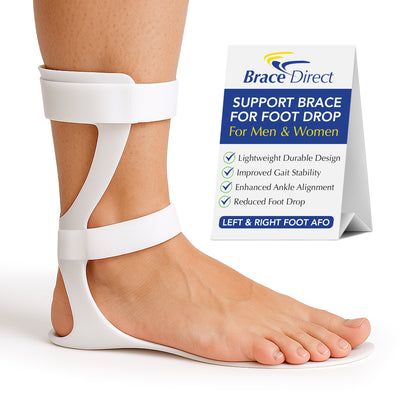

Most AFOs are made to wear inside a shoe. The footplate slides under your foot, so the shoe holds the brace in place. A few tips make it easier:
A foot-up brace is a lighter option: a soft ankle cuff with a strap that lifts the front of the shoe.

An AFO is made for walking, not sleeping. At night, a night splint holds the foot at 90 degrees so the calf and Achilles tendon don't tighten while you rest. Tight calves can make foot drop harder to manage during the day.

With MS, foot drop often gets worse as you tire later in the day or in the heat. A light AFO, such as a leaf spring or carbon fiber brace, lifts the toes without adding much weight. Some people with MS wear a brace only on long outings or on harder days.
Talk to your neurologist or physical therapist about which design fits your walking pattern. Ask whether a brace that lets the ankle move a little would help you keep your strength.

A brace doesn't treat neuropathy. It can help when nerve damage weakens the muscles that lift the foot and causes foot drop. An AFO keeps the toes up so you're less likely to trip. If you have numbness, check your skin under the brace every day, because you may not feel rubbing or pressure.

Wear it 1 to 2 hours a day at first, then add time as it feels comfortable. Walking with it gets easier with each week of practice.
Look for red marks after each use. Marks that don't fade soon after you take it off mean the fit needs adjusting.
A thin sock that reaches above the cuff helps prevent rubbing and keeps the brace clean.
Walk at home first, then try stairs, ramps and outdoor surfaces.
Most foot drop braces have an HCPCS code, the billing code Medicare and insurers use for medical equipment. We don't bill insurance, but you can submit your receipt to your insurer for possible reimbursement. Most of our braces are also HSA and FSA eligible.

US-based team, Monday to Friday
Not sure which foot drop brace fits you? Tell us how you walk, what shoes you wear and what your doctor said. Our specialists can help you choose a size and style before you buy, and after your brace arrives you can use our fitting videos or book a virtual fitting session.
Unused items in their original packaging can be returned or exchanged within 30 days of purchase. See our Return Policy for details.
Contact Our TeamFor most people, an AFO that lifts the toes on every step. Choose a leaf spring AFO for mild foot drop and daily walking, or a carbon fiber AFO if you're active and walk longer distances.
Suggested: Brace Direct Leaf Spring AFO or WalkOn Reaction AFO
Many people walk more evenly and with less tripping once they get used to their brace. It gets easier with practice, so start with short walks and build up.
Yes. Most AFOs fit inside a sneaker or lace-up shoe with the insole removed. Shoes with a wide toe box work best.
Suggested: Brace Direct Leaf Spring AFO
Not an AFO. At night, use a night splint that holds the foot at 90 degrees so the calf doesn't tighten.
Suggested: Brace Direct 90 Degree Night Splint
It depends on the cause. Foot drop from a nerve injury may improve as the nerve heals. Foot drop from a stroke or a long-term condition often needs ongoing support.
You can buy most of our foot drop braces without a prescription. We don't bill insurance, but if you plan to submit your receipt for possible reimbursement, your insurer may ask for one.