
U.S-Based Expert Support
M–F 9a–5p EST
M–F 9a–5p EST
The best neck brace for neck pain is usually a soft cervical collar worn for short periods, which rests strained muscles and reminds you to keep your head level. It can also ease tech neck and soreness from forward head posture while you change your screen habits, and it may help for a short time after whiplash.

A soft collar takes some weight off the neck so sore muscles can relax.
Gentle support reminds you not to drop your chin toward a screen.
Short wear during drives and long workdays can make sore days easier.
Most neck pain comes from tired or strained muscles rather than a serious injury. Mayo Clinic explains that poor posture, whether from leaning over a computer or hunching over a workbench, strains neck muscles. Looking down at a phone for long stretches does the same thing, which is why people call it text neck or tech neck.
When your head drifts forward, your neck and upper back muscles work harder to hold it up. Over a long day that can leave you sore, stiff and achy between the shoulder blades. Doctors call this habit forward head posture.
A neck brace can help neck pain for short periods by resting strained muscles and reminding you to keep your head level. It won't change your posture on its own, and it works best alongside breaks, stretching and a better screen setup. The good news is that, according to Cleveland Clinic, neck pain from strains and stress usually improves within a week or two.
A pulled or overworked muscle from sleeping wrong, lifting or a long day at a desk.
Hours of looking down at a phone or laptop load the muscles at the back of the neck.
A fast back-and-forth jolt, often from a rear-end car crash, strains the soft tissues of the neck.
See a doctor if pain follows an accident or fall, spreads down your arms, or comes with numbness, tingling, weakness or a headache. A brace supports your neck; it doesn't treat the cause.
Choose by what is causing the pain and how long you plan to wear it. Most everyday neck pain only needs light support.
Light support for a strained neck, a sore day at work or a short car ride.
Firmer support when your doctor wants more motion limited, such as after an injury.
A gentle stretch to ease tight neck muscles at the end of the day.
For a pulled muscle or a stiff, sore neck, a soft cervical collar is usually the best place to start. It is light, it closes with hook and loop, and it gently limits motion so tired muscles can relax. Wear it for a few hours at a time, not all day.

No neck brace can reshape your posture. The best neck brace for posture is one you use briefly to rest sore muscles while you build better habits, like raising your screen and taking breaks. For forward head posture from desk or phone use, those habits do most of the work.
Mayo Clinic suggests holding your phone up at eye level, setting your monitor at eye level and getting up often to stretch your neck and shoulders. If your neck is still sore by evening, a home traction device can gently stretch tight muscles while you rest.

A soft collar can help for a short time right after whiplash, but long wear can slow your recovery. Mayo Clinic notes that some experts suggest using a foam collar no more than 72 hours, while others say up to three hours a day for a few weeks. Your doctor can tell you which plan fits you.
Get checked after any car accident or fall that hurts your neck, to rule out a fracture. Mayo Clinic says most people who have whiplash feel better within a few weeks. Gentle movement, heat or cold and the exercises your doctor suggests help most.
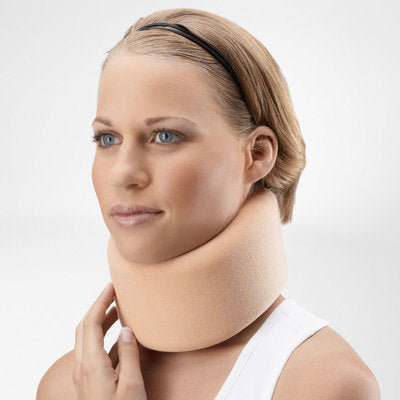

An hour or two at a time is enough for most neck strain.
The collar should support your chin without tipping it up.
Gentle turns and shoulder rolls between sessions keep muscles from stiffening.
A raised screen and a good chair do more for posture than any brace.
Each product page has its own size chart, since sizing differs by brace and manufacturer.
Some neck braces carry an HCPCS code, the billing code Medicare and insurers use, though many soft collars and home traction devices do not. We don't bill insurance, but you can submit your receipt to your insurer for possible reimbursement. Most of our braces are also HSA and FSA eligible.

US-based team, Monday to Friday
Not sure which neck brace fits your neck pain? Tell us how it started, when it hurts most and how long you sit at a screen each day. Our specialists can help you choose a size and style before you buy, and after your brace arrives you can use our fitting videos or book a virtual fitting session.
Unused items in their original packaging can be returned or exchanged within 30 days of purchase. See our Return Policy for details.
Contact Our TeamFor most neck strain, a soft cervical collar worn for a few hours at a time. It rests sore muscles without holding your neck still all day.
Suggested: Brace Direct Soft Cervical Collar
No brace can reshape your posture. A soft collar or gentle home traction can ease sore muscles while you raise your screen, take breaks and build strength.
Suggested: Brace Direct Digital Cervical Traction Unit
No. A brace can remind you to keep your head level, but posture changes come from your screen setup, regular breaks and exercises a therapist can show you.
The soreness from text neck often eases once you change how you use your phone and computer. Hold screens at eye level, take breaks and keep your neck moving.
A soft collar is fine for short stretches at a desk. Raise your screen to eye level first, and take the collar off every hour or two to move your neck.
Suggested: Brace Direct Soft Cervical Collar
Only briefly, and after a doctor has checked you. Some experts suggest a foam collar for no more than 72 hours, while others allow up to three hours a day for a few weeks.
Suggested: Bauerfeind CerviLoc Neck Brace