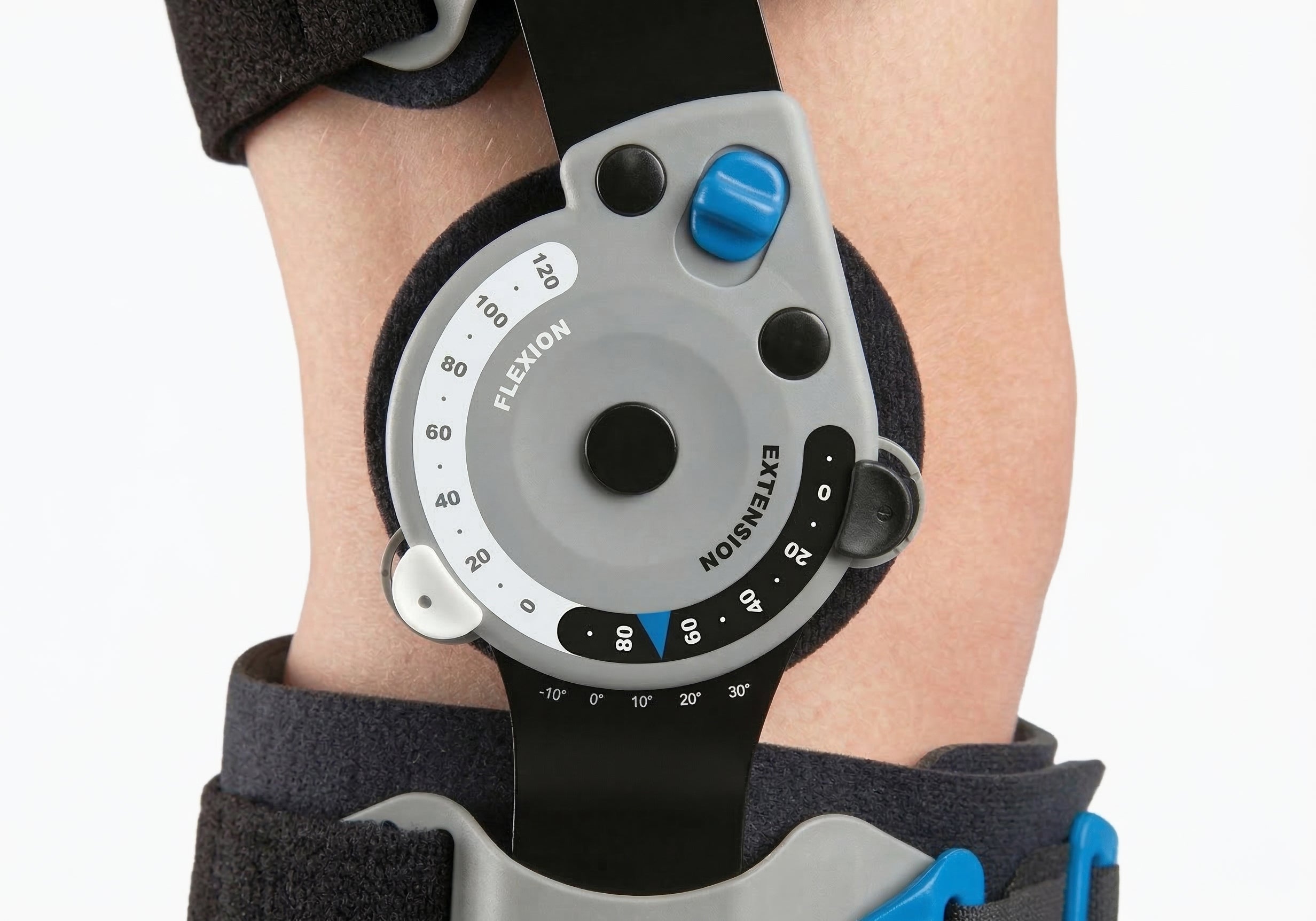
Recover safely after knee surgery with post-operative knee braces featuring adjustable range of motion (ROM) control, telescoping length, and secure immobilization. Designed for ACL reconstruction, meniscus repair, total knee replacement, and other knee procedures.
Post-Surgery Knee Recovery: Understanding Your Recovery and How Bracing Helps
Your knee surgery is a major step toward better mobility. Learn how post-op braces protect your repair, control your range of motion at every stage of healing, and help you recover safely and confidently.
Post-operative knee recovery is the structured healing process that follows surgical procedures on the knee joint. A post-op brace is one of the most important tools in that process.
Whether you have had ACL reconstruction, meniscus repair, total knee replacement, or another procedure, recovery follows a predictable progression. Your surgeon repairs or replaces damaged structures inside the knee, and then your body needs time to heal those tissues while gradually rebuilding strength and range of motion.
According to the American Academy of Orthopaedic Surgeons (AAOS), post-op bracing plays a critical role in protecting the surgical repair while allowing controlled, progressive movement that promotes healing.
Post-op knee braces differ from everyday supports. They feature rigid or semi-rigid structures, precision range of motion (ROM) hinges, telescoping length adjustments, and secure strapping systems that maintain consistent positioning throughout the day.
4-12 wksTypical post-op bracing duration
10-15°Weekly ROM progression increments
CriticalHinge alignment for proper healing
Is This Right for You?
Who Needs a Post-Operative Knee Brace?
Post-op knee braces are prescribed for a wide range of surgical procedures, each with specific recovery requirements that the brace helps manage.
People Recovering from ACL Reconstruction
A post-op brace protects the graft while it integrates into the bone. ROM is typically increased gradually over 4 to 8 weeks to protect the graft from excessive stress.
People Recovering from Meniscus Repair
Repaired meniscal tissue needs protection from full weight-bearing and deep flexion. A brace locked in extension or set to limited ROM prevents motions that could disrupt the repair.
People After Total or Partial Knee Replacement
After knee arthroplasty, a post-op brace controls swelling, provides stability as you learn to walk on your new joint, and prevents hyperextension that could stress prosthetic components.
People After Patellar Surgery
Procedures such as lateral release, MPFL reconstruction, or tibial tubercle osteotomy require careful motion management. A post-op brace limits flexion to protect the surgical site.
People After Multi-Ligament Repair
MCL, PCL, and LCL repairs and reconstructions often require post-op bracing to protect the repaired structures from varus, valgus, or rotational stresses during healing.
People After Fracture Fixation Surgery
After surgical fixation of fractures around the knee, a post-op brace provides external immobilization that supplements the internal fixation hardware during bone healing.
How It Works
How Post-Op Knee Braces Support Recovery
Post-operative knee braces provide several critical functions that work together to create the optimal environment for surgical healing.
Range of Motion Control
Precision ROM hinges allow your surgeon to set specific limits on flexion and extension. Settings are gradually expanded in 10 to 15 degree increments as tissues heal, ensuring you regain mobility without compromising the repair.
Stability & Protection
Rigid side stays and hinge mechanisms prevent unwanted lateral, rotational, and hyperextension movements that could damage the surgical repair, especially during weight-bearing in the early recovery period.
Swelling Management & Confidence
Padded liners and compression from the strapping system manage post-surgical swelling. The brace also provides psychological reassurance, allowing you to participate more fully in physical therapy.
What the research says: Clinical protocols consistently show that controlled early motion with a post-op brace results in better long-term range of motion, reduced stiffness, and faster return to function compared to prolonged immobilization alone.
Brace Types Compared
Types of Post-Operative Knee Braces
Post-op knee braces fall into several categories based on their design and the level of control they provide.
Telescoping ROM Braces (T-Scope)
Adjustable-length thigh and calf sections connected by ROM hinges. Can be customized to virtually any leg size and shape. The most versatile option for the widest range of procedures.
Best for: Most knee surgeries, universal sizing
Best Overall
Standard Post-Op Braces
Pre-sized (S/M/L) with reliable ROM control. Simpler design that works well for patients whose measurements fall within standard ranges.
Best for: Standard recovery protocols
Reliable Option
Premium Post-Op Braces
Advanced features including cooler padding, more precise ROM mechanisms, tool-free adjustment, and enhanced comfort. Often preferred by surgeons for complex reconstructions.
Best for: Complex procedures, extended wear
Premium Choice
Knee Immobilizers
Rigid stays and Velcro straps hold the knee in full extension. Used in the immediate post-op period when complete immobilization is required before transitioning to a ROM brace.
Best for: Immediate post-op immobilization
Short-Term Use
What to Look For
Key Features in a Post-Op Knee Brace
Post-op braces vary in design, materials, and adjustability. Focus on features that directly impact your recovery experience.
Precision ROM hinges: Look for hinges that lock securely at specified angles, adjust in small increments (ideally 10 degree intervals), and offer independent control of both flexion and extension limits.
Telescoping length adjustment: Adjustable-length thigh and calf sections ensure the hinge aligns precisely with your knee joint. Proper alignment is critical because a misaligned hinge creates binding and inaccurate ROM control.
Padded, contoured liner: Soft, breathable padding that conforms to your leg reduces pressure points and wicks moisture during extended wear. Removable, washable liners help maintain hygiene.
Secure strapping system: Wide, padded straps with strong Velcro keep the brace positioned correctly. Look for at least 3 to 4 attachment points and straps you can adjust with one hand while using crutches.
Universal fit (left/right): Most quality post-op braces fit either leg, eliminating the risk of ordering the wrong side.
Lightweight construction: Aircraft-grade aluminum and high-strength polymers achieve strength without excessive weight, reducing fatigue during walking and therapy.
Pro Tip: Have someone check the hinge alignment from the side while you are standing. The hinge center should line up with the crease behind your knee (popliteal crease). If the hinge is misaligned, adjust the telescoping sections until the brace moves smoothly with your knee.
Getting the Right Fit
Sizing & Fit Tips
Correct sizing and fit are non-negotiable for post-op braces. Improper alignment can compromise the ROM settings and interfere with your recovery protocol.
Measure Thigh and Calf Circumference
Measure at mid-thigh and mid-calf. For length, measure from mid-thigh to mid-calf with the knee slightly bent. If your leg is swollen from surgery, your therapist can help determine the appropriate size.
Align the Hinge with Your Joint Line
The brace hinge must align with your knee's axis of rotation, roughly at the center of the side of your knee. Use the telescoping adjustments to position it correctly.
Adjust Straps and Check for Gaps
Fasten straps with firm, even tension. The brace should feel secure without constriction. Check for gaps between the brace and your leg, as gaps allow the brace to shift during weight-bearing.
Post-Surgical Swelling
Your leg circumference will change as swelling increases and then decreases. Adjust strap tension daily, especially during the first two weeks. Additional padding may be needed as swelling resolves.
ROM Setting Verification
Periodically verify that the ROM hinge settings have not shifted. Daily vibrations and forces can cause settings to drift. Compare current settings to your surgeon's prescribed limits.
We stand behind every brace we sell. If it doesn't fit right, we'll make it right. Our US-based brace specialists are available to help you find the perfect size and style for your condition before you buy, and our Perfect Fit Guarantee means you can shop with confidence. Need help? Contact our team.
Living with Post-Op Recovery
Managing Knee Recovery Beyond Bracing
Your post-op brace is one part of a comprehensive recovery plan. These complementary approaches help you heal faster and more completely.
🏊
Physical Therapy
Structured rehabilitation exercises rebuild strength, restore range of motion, and retrain movement patterns. Follow your therapist's protocol closely for the best long-term outcome.
⚖️
Follow Your Protocol
Your surgeon's ROM progression and weight-bearing schedule are designed specifically for your procedure. Do not advance ahead of schedule, even if your knee feels good.
🩺
Know When to Call Your Surgeon
Increased pain, sudden swelling, redness or warmth at the incision, fever above 101.5 F, or significant calf swelling all warrant prompt communication with your surgical team.
Did You Know? Elevating your leg above heart level for 15 to 20 minutes several times a day helps gravity drain excess fluid from the surgical site. Combine elevation with icing for the fastest swelling reduction during the first two weeks.
Technology
Brace Technologies That Support Post-Op Recovery
Precision ROM dials allow your surgeon to set and adjust motion limits at each stage of recovery.
Modern post-op knee braces use precision engineering to deliver controlled recovery with maximum comfort.
Precision geared ROM hinges: Medical-grade hinge mechanisms with numbered degree markings provide accurate, repeatable motion limits. Independent flexion and extension controls allow fine-tuned adjustments at each follow-up appointment.
Telescoping aluminum frame: Aircraft-grade aluminum bars with push-button or pin-lock telescoping adjustment accommodate any leg length while maintaining structural rigidity and keeping weight low.
Quick-release strapping systems: Padded straps with one-hand operation allow patients on crutches to apply and remove the brace independently. Anti-migration silicone grip panels prevent shifting during weight-bearing.
Breathable contoured padding: Moisture-wicking foam liners with anatomical contouring distribute pressure evenly and prevent skin breakdown during the extended wear periods that post-surgical recovery demands.
Coverage & Savings
Insurance and Payment Options
Many post-operative knee braces qualify for insurance reimbursement or tax-advantaged health accounts.
PDAC Approved
Many of our post-op knee braces carry PDAC approval, which means they meet Medicare coding standards for reimbursement through your insurance provider.
HSA / FSA Eligible
Knee braces are eligible expenses for Health Savings Accounts and Flexible Spending Accounts, letting you pay with pre-tax dollars.
Brace Direct is a direct-to-consumer medical brace provider. We do not bill insurance directly. If your brace qualifies for reimbursement, you purchase it and submit a claim to your insurance provider. We provide itemized receipts to make the process straightforward.
Tip: Check with your insurance provider before purchasing. Many plans cover post-op knee braces with a prescription. We can help you figure out which products in our catalog are most likely to qualify.
Ready to Support Your Surgical Recovery?
Browse our full collection of post-operative knee braces, from telescoping T-Scope designs for universal fit to premium braces with advanced ROM control. Every order ships free in the continental US, and our US-based brace specialists are here to help you find the right fit.
How long will I need to wear a post-op knee brace after surgery?
The duration varies by procedure. ACL reconstruction typically requires 4 to 8 weeks of post-op bracing. Meniscus repair may require 4 to 6 weeks. Total knee replacement bracing varies but often lasts 2 to 6 weeks. Your surgeon will provide a specific timeline based on your procedure and recovery progress. Do not stop wearing the brace before your surgeon clears you, even if your knee feels good.
Can I sleep in my post-op knee brace?
Most surgeons recommend wearing the brace while sleeping during the first few weeks. Nighttime bracing prevents accidental flexion or hyperextension that could damage the repair. The brace is typically locked in full extension for sleeping. As recovery progresses, your surgeon may allow you to remove it at night.
How do I adjust the ROM settings on my post-op brace?
ROM adjustments are typically made using a small tool included with your brace. The hinge mechanism has numbered markings indicating degrees of flexion and extension. Always follow your prescribed ROM protocol precisely. If you are unsure about the settings, contact your surgeon or physical therapist before making any adjustments.
Breg T Scope Premier vs. Ossur Rebound Post-Op: which is better?
Both are excellent post-op braces used by orthopedic surgeons. The Breg T Scope Premier features robust hinge mechanisms and a well-established design at a mid-range price. The Ossur Rebound Post-Op is a premium option with advanced padding, precise ROM mechanisms, and enhanced comfort features. Both provide reliable ROM control for the same range of procedures. The primary differences are in comfort refinements and price point.
How do I clean and maintain my post-op knee brace?
Remove the padded liner and hand wash it in lukewarm water with mild soap every few days. Air dry completely before reinstalling. Wipe down rigid components and hinge mechanisms with a damp cloth. Avoid submerging hinges in water. Keep Velcro closures free of lint and debris. Check screws and fasteners periodically for looseness and tighten as needed.